
This blog explores how combining DataOps an agile, automated approach to data management with Artificial Intelligence (AI) creates a powerful framework for delivering reliable, high-quality data solutions at scale. It highlights how DataOps accelerates data preparation, integration, and governance while AI enhances analytics, automates intelligent decision-making, and improves operational efficiencies. By aligning efficient data workflows with AI-driven insights, organizations can unlock faster time-to-value, stronger data quality, and more impactful, scalable AI deployments across business functions.
Exploring the fusion of DataOps and AI in transforming data management
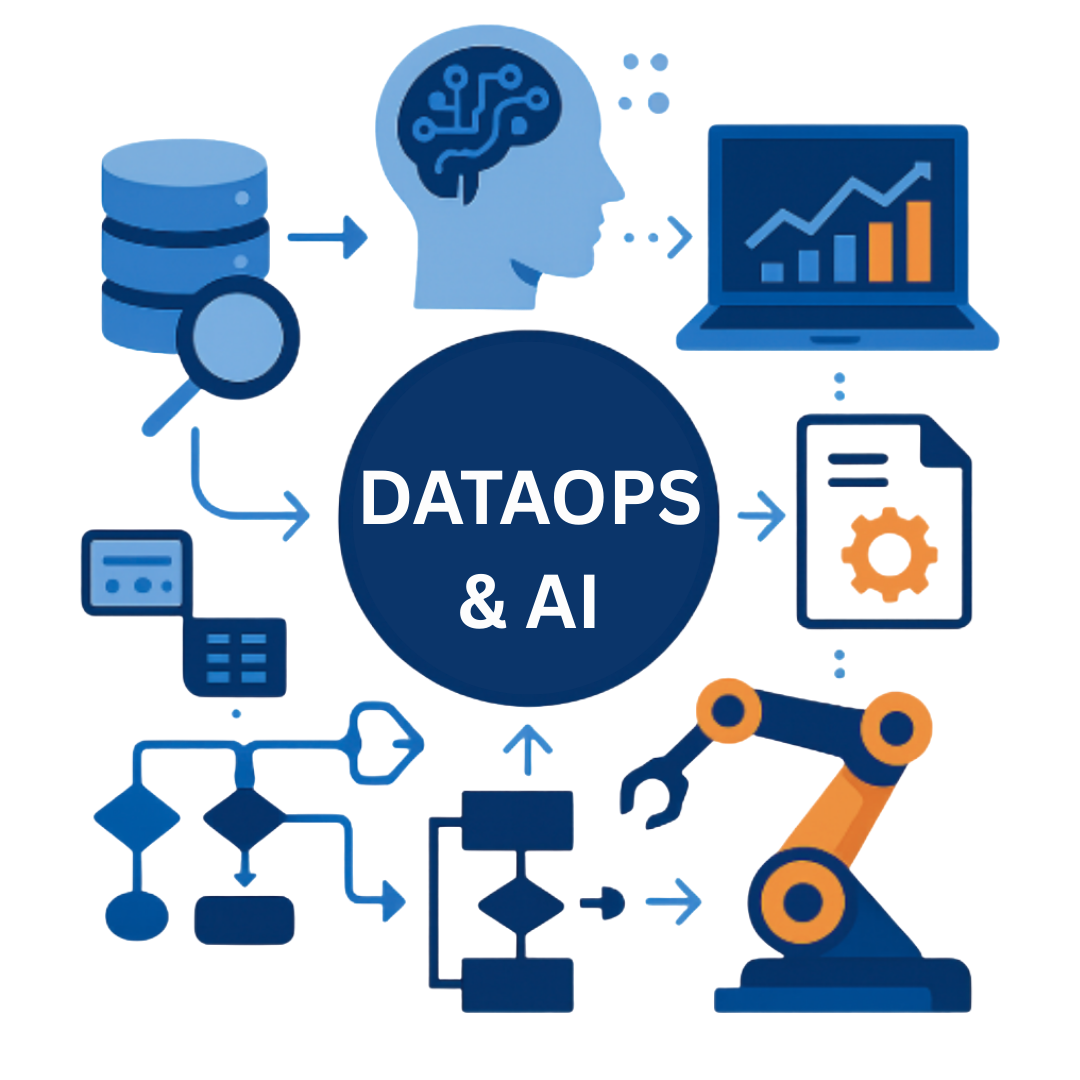
The escalating volumes and complexity of data in today's digital landscape necessitate innovative approaches to data management. Organizations across industries are grappling with the challenges of efficiently collecting, processing, and extracting value from their data assets. Traditional data management practices often fall short in addressing these demands, leading to inefficiencies, data silos, and delayed insights. In response, a modern paradigm has emerged, known as DataOps, which applies principles from DevOps, Agile, and Lean methodologies to streamline data workflows. Simultaneously, the rapid advancements in Artificial Intelligence (AI) offer powerful tools to automate and enhance various aspects of data management. The convergence of DataOps and AI presents a transformative opportunity to revolutionize how organizations manage their data, enabling them to achieve greater agility, efficiency, and derive maximum value from their information. This report delves into the definitions and principles of DataOps, explores the role of AI in modern data management, investigates how AI is being integrated into DataOps workflows, examines the benefits of this synergy, provides real-world applications, identifies potential challenges, and discusses future trends in this evolving field.
Architecting the Future of Intelligent Data Operations
In an era where data fuels every critical decision, the ability to manage, govern, and extract value from data at scale has become a strategic necessity across every industry. Whether enabling hyper-personalized customer experiences, training next-generation AI models through advanced data intelligence, or ensuring real-time risk and compliance intelligence—data is the competitive currency of digital transformation. However, as organizations strive to harness the full potential of data, they are often hamstrung by legacy systems, manual workflows, siloed teams, and reactive operations.
Businesses today are inundated with exponential data growth—from structured operational databases and transactional logs to unstructured content, IoT sensor streams, third-party APIs, and user-generated media. The volume, velocity, and variety of this data exceed the capabilities of traditional data management frameworks, which are typically fragmented, error-prone, and slow to adapt to change. Moreover, business demands for real-time insight, explainable AI, and always-on services have put traditional data engineering models under immense pressure.
To address this complexity, a new paradigm has emerged—DataOps. Built on the foundational principles of DevOps, Agile, and Lean methodologies, DataOps applies continuous integration, delivery, testing, and monitoring practices to the data lifecycle. It transforms the way cross-functional data teams build, deploy, and operate data products. From pipeline version control to automated testing, observability, and metadata-driven orchestration—DataOps is not just about accelerating data movement. It's about delivering trusted, production-grade data continuously, reliably, and at scale.
When supercharged with Artificial Intelligence (AI), this fusion becomes transformational. AI injects intelligence into every layer of the pipeline—automating data discovery, classification, error correction, performance tuning, and even root cause analysis. The convergence of AI and DataOps enables organizations to build adaptive, self-optimizing data ecosystems that respond dynamically to business needs and operating conditions through cutting-edge solutions.
Whether it's real-time personalization, fraud prevention, anomaly detection, dynamic supply chain decisions, or scalable AI model training, the synergy between DataOps and AI is redefining how data is prepared, processed, and consumed—at scale and in production.
Why DataOps + AI, and Why Now?
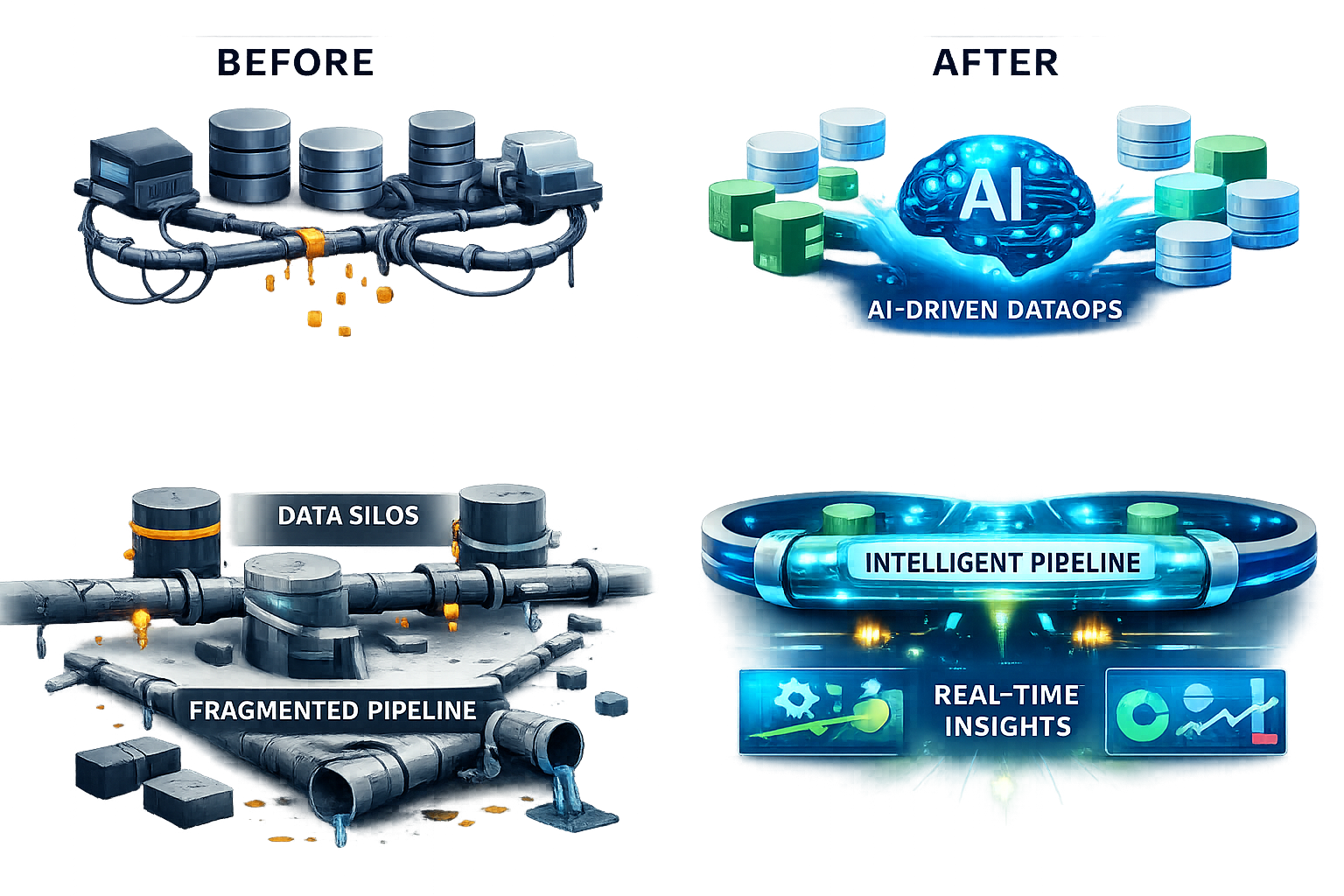
As enterprises embrace digital transformation, the volume and complexity of data generated across systems, applications, and devices are skyrocketing. IDC projects that the global datasphere will grow to over 175 zettabytes by 2025, creating an unprecedented need for scalable, resilient, and intelligent data operations. Yet, many organizations are still burdened by legacy data architectures, manual processes, inconsistent governance models, and data silos that hinder real-time insight and innovation.
Simultaneously, market demands are evolving at breakneck speed. Customers expect personalized experiences, regulators demand real-time compliance, and leadership wants data-driven decisions without latency. These imperatives have pushed businesses to rethink their data pipelines - not just in terms of speed, but also in terms of intelligence, reliability, and adaptability.
DataOps has emerged as a response to this pressure, bringing CI/CD, agile collaboration, and automation into the data lifecycle. It enables faster development, deployment, and scaling of data products by unifying data engineering, operations, and analytics teams through strategic consulting. But the next leap forward comes from integrating Artificial Intelligence directly into these DataOps pipelines.
AI amplifies DataOps by introducing real-time anomaly detection, automated schema evolution, metadata enrichment, and dynamic performance optimization through cloud infrastructure operations. It enables pipelines that self-heal, scale autonomously, and evolve with changing data environments. Moreover, AI-powered tools democratize access to data by allowing non-technical users to interact with complex datasets using natural language interfaces and context-aware suggestions powered by .
The Core Principles: Intelligent, Automated, Agile
At its core, DataOps applies proven principles from modern software engineering—automation, agile collaboration, continuous delivery, observability, and monitoring—to the data lifecycle. It transforms what was once a fragmented, manual, and error-prone data management process into a disciplined, resilient system for continuous data delivery. In this framework, pipelines are not static assets—they are dynamic, evolving artifacts that are versioned, tested, and monitored just like application code.
By applying this mindset, DataOps empowers organizations to build data workflows that are not only scalable and modular but also responsive to rapid change. Whether responding to schema drift, onboarding new data sources, or supporting real-time AI model training, DataOps allows teams to experiment, deploy, and scale with confidence.
DataOps builds on these foundational pillars:
-
Continuous Integration and Delivery (CI/CD) for data pipelines: Just like modern DevOps, CI/CD in DataOps ensures that every change—whether to schema, transformation logic, or source configuration—is automatically tested and deployed. This reduces deployment errors, supports rollback, and shortens release cycles.
-
Component-based orchestration using reusable, scalable modules: Pipelines are built using modular, containerized components that can be reused across teams and projects. This composability improves maintainability and enables parallel processing for higher throughput.
-
Agile collaboration between data engineers, scientists, analysts, and business stakeholders: DataOps fosters a culture of shared responsibility and fast feedback loops. Sprint-based delivery models ensure that pipeline updates are continuously aligned with evolving business requirements.
-
Automated quality checks, lineage tracking, and version control: Every transformation is validated through pre-built assertions and anomaly detection logic using quality assurance methodologies. Lineage tools automatically document data flow, while version control ensures traceability, reproducibility, and compliance.
AI elevates each of these capabilities by transforming static automation into dynamic, intelligent execution:
Strategic Benefits: AI-Powered DataOps in Action
-
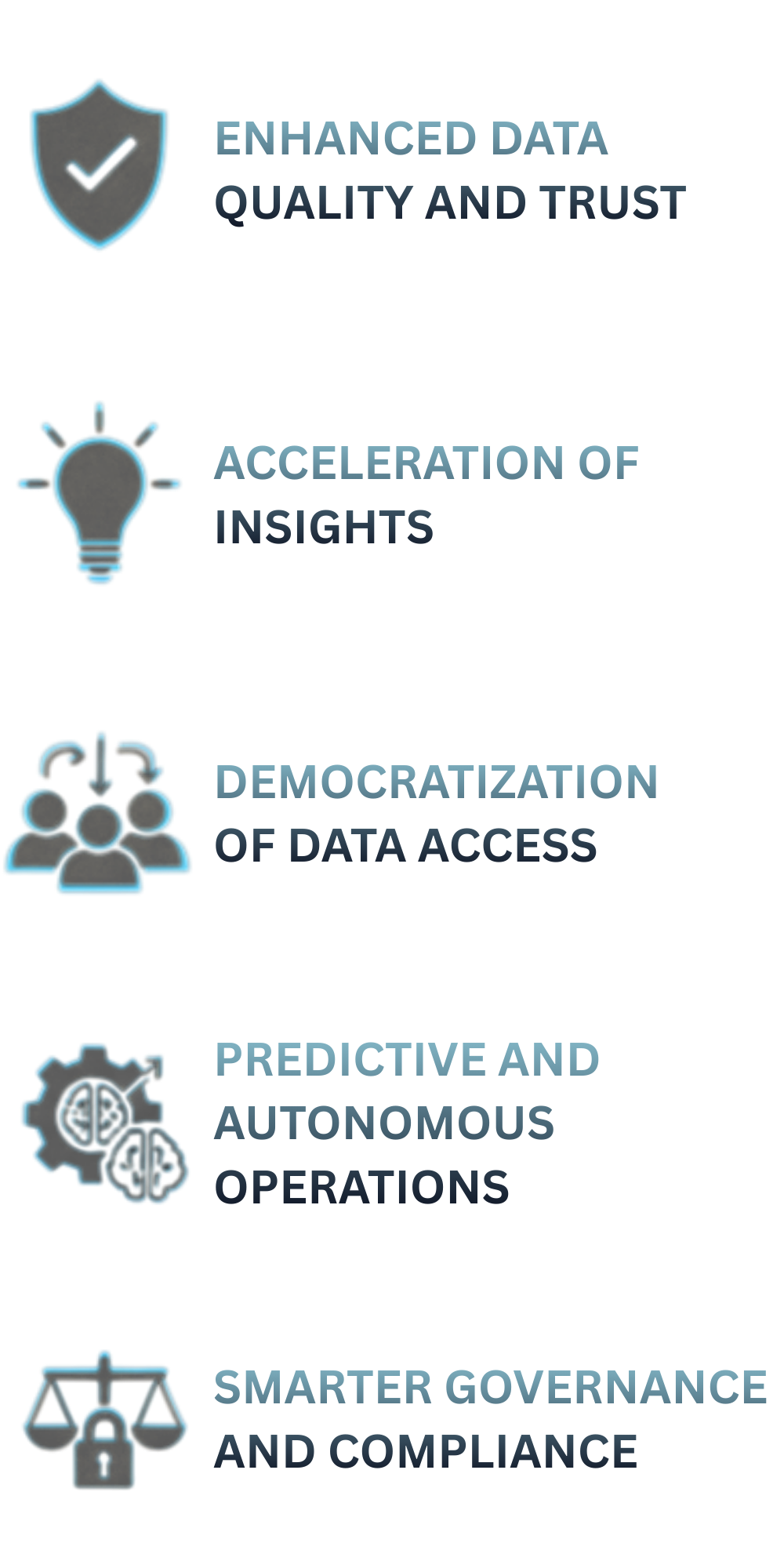
Enhanced Data Quality and Trust
High-quality data is the cornerstone of analytics, machine learning, and executive decision-making. AI-powered validation systems proactively monitor pipelines for issues like schema drift, null value surges, and type mismatches. Instead of relying on batch-based quality checks or manual reviews, ML algorithms detect and resolve errors in real-time. These models not only cleanse and normalize incoming data but also enforce policies based on historical quality baselines—ensuring every downstream model or dashboard is powered by consistent, reliable inputs. This trust is especially crucial in regulated industries where data provenance and integrity must be auditable at every stage.
-
Acceleration of Insights
Speed-to-insight has become a key performance indicator for data-driven enterprises. AI-enabled DataOps pipelines automate every step—from ingestion and transformation to enrichment and delivery—allowing business users and analysts to focus on insights, not infrastructure. For example, a retail company can detect and respond to changes in customer behavior within minutes, not days. Algorithms optimize data routing, caching, and processing in real-time, adapting to usage spikes and accelerating throughput. By automating data preparation and pipeline tuning, organizations shrink the time between data capture and business action.
-
Democratization of Data Access
Data democratization is no longer a luxury—it's a competitive necessity. AI democratizes access by powering natural language interfaces, smart data discovery tools, and context-aware recommendations. A marketing manager, for instance, can ask, "What regions had the highest conversion rates last week?" and get instant results without writing a single query. AI-driven summarization, auto-charting, and embedded analytics allow non-technical stakeholders to engage directly with data—reducing bottlenecks on data teams and fostering a culture of self-service analytics.
Real-World Applications
The convergence of AI and DataOps is delivering transformative results across sectors—proving its value not just as an operational upgrade but as a core pillar of digital strategy.
-
Netflix leverages AI-driven DataOps to power real-time content recommendations for over 200 million users worldwide. Its data pipelines dynamically ingest and process behavioral signals—such as viewing time, engagement levels, and preferences—while AI models adjust recommendations per user segment, time of day, and trending content. This results in hyper-personalized streaming experiences, reduced churn, and increased content discoverability.
-
Walmart integrates AI into its DataOps platform to manage inventory across thousands of stores in real-time. By fusing demand forecasts, logistics data, and point-of-sale analytics, the system automates restocking decisions, adjusts prices dynamically based on regional demand, and predicts out-of-stock events before they occur. This has significantly improved supply chain resilience and reduced wastage.
-
Gogo Inflight uses AI-augmented DataOps to enhance aircraft maintenance and performance. IoT telemetry from in-flight equipment is streamed to AI models that detect early signs of malfunction—allowing teams to schedule preventive maintenance before disruptions occur. This predictive approach improves service continuity and operational efficiency in the aviation industry.
-
Fintech companies rely on AI-powered DataOps to build real-time fraud detection systems and financial advisory engines through future-ready solutions. These platforms combine transaction monitoring, behavioral analytics, and regulatory data to trigger risk flags, automate compliance workflows, and deliver personalized investment recommendations—all while maintaining the strictest levels of traceability and auditability.
-
Healthcare providers implement AI-infused DataOps for secure, responsive patient care. AI models streamline electronic health record (EHR) ingestion, normalize data across disparate sources, and enable real-time diagnostic support through anomaly detection and patient risk profiling. Integration with compliance engines ensures that all operations remain HIPAA-compliant while enhancing care delivery.
Challenges & Considerations
Despite the transformative potential of AI-powered DataOps, implementation is not without its hurdles. Enterprises must address several strategic and operational considerations to ensure long-term success:
-
Cultural Adoption: Moving from a reactive, siloed data culture to a proactive, collaborative one requires a significant mindset shift. Success demands buy-in from leadership, cross-functional alignment, and investment in upskilling teams on agile and data engineering best practices.
-
Toolchain Integration: Modern data ecosystems span dozens of tools across ingestion, transformation, orchestration, and analytics. Harmonizing these into a cohesive, interoperable pipeline—while maintaining performance, security, and cost efficiency—remains one of the toughest integration challenges.
-
Data Ethics and Governance: As AI models act on data from automated pipelines, questions of bias, transparency, consent, and compliance become central. Organizations must embed ethical AI principles and governance policies into every stage—from data acquisition and labeling to model monitoring and drift detection.
-
Change Management: Embedding AI in data operations often disrupts traditional roles and workflows. Without strong change management, organizations risk resistance, misalignment, or underutilization of new capabilities.
-
Cost and ROI Visibility: While AI-driven automation can reduce operational overhead, the upfront investment in tools, infrastructure, and skills can be significant. A clear ROI framework is essential to guide decisions, prioritize initiatives, and measure success.
By embedding governance, observability, and transparency into every layer of their DataOps architecture, organizations can mitigate these risks and unlock the full value of intelligent automation—responsibly and sustainably.
The Road Ahead: Toward Autonomous Data Systems
As organizations evolve toward data-native operations, the next horizon is fully autonomous data systems—ecosystems that not only move and manage data but also make intelligent, real-time decisions about how to do so. AI-powered DataOps is not just a modernization layer; it's the foundation for the next generation of resilient, adaptive, and intelligent data platforms.
AI-powered DataOps is a launchpad for:
-
Generative pipelines that build, modify, and optimize themselves in response to shifting business needs and user input. These pipelines dynamically configure data sources, transformation logic, and delivery targets using reinforcement learning and intent-driven interfaces.
-
Autonomous agents that manage data ingestion, validate data quality, monitor drift, enforce policies, and trigger alerts or remediations—without human intervention. These agents reduce operational overhead and increase uptime, ensuring data trust and availability.
-
Self-optimizing architectures that continuously learn from workload patterns, access behaviors, and performance telemetry to fine-tune compute, storage, and caching strategies—lowering costs while improving responsiveness.
These capabilities point to a future where data systems behave more like intelligent co-pilots than static infrastructure. They respond proactively to changes, scale predictively with demand, and support the delivery of real-time, context-aware intelligence to every team in the enterprise.
This isn't the future—it's the frontier being built today, and organizations that adopt AI-powered DataOps now will be best positioned to lead in the era of autonomous enterprise intelligence.

Let Datopic Help You Build Smarter
At Datopic Technologies, we design intelligent, scalable data architectures that bring AI-driven DataOps to life through our comprehensive technology platforms. From implementing AI copilots for observability to deploying adaptive pipelines that scale with business needs, we help enterprises unify automation, governance, and intelligence in their data strategy.
From AI-powered quality monitoring and self-healing pipelines to predictive data orchestration and intelligent metadata management, we implement comprehensive DataOps frameworks that deliver continuous data reliability and agility.
👉 Explore Services
👉 Request a Consultation
Let's build the intelligent data foundation your future deserves—one that enables autonomous operations, real-time insights, and data-driven innovation at scale.