Water sustainability is a pressing global issue that requires innovative solutions. In recent years, advancements in technology have opened new possibilities for addressing this challenge. The convergence of blockchain, IoT, OT, quantum computing, AI & machine learning, and AR/VR has the potential to revolutionize water management and promote sustainable practices. This article explores the intersection of technology and water sustainability, the role of each technology in water management, and the potential applications they offer.
Understanding the Intersection of Technology and Water Sustainability
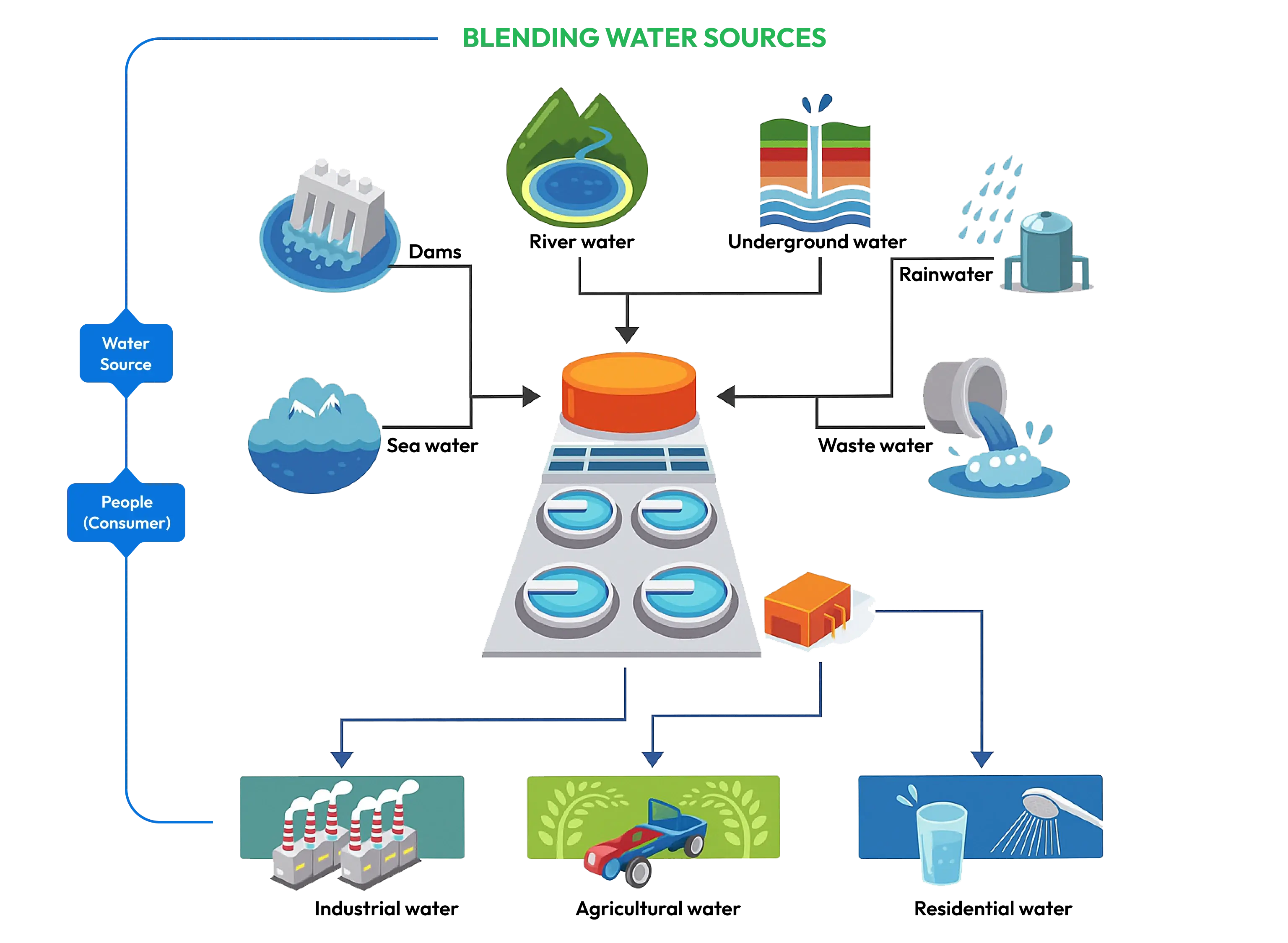
Technology has become an integral part of our daily lives, influencing various aspects of society, including resource management. When it comes to water sustainability, technology has the power to improve efficiency, optimize water usage, and mitigate the impacts of water scarcity.
Water management is a complex process that involves monitoring water quality, tracking consumption, and ensuring the equitable distribution of resources. Technology plays a crucial role in these aspects, enabling real-time data collection, analysis, and decision-making.
Water managers are constantly striving to find innovative solutions to enhance water sustainability. One such solution is the use of advanced sensors and monitoring devices. These devices can be strategically deployed across water infrastructure to collect real-time data on water quality and quantity. By continuously monitoring these parameters, water managers can identify potential issues—such as leaks or contamination—and take immediate action to prevent further damage.
But the role of technology in water management goes beyond just monitoring—it also enables efficient water distribution systems. Through automation and remote control, water utilities can optimize water flow, reduce waste, and ensure that water reaches every consumer reliably. This not only conserves water but also improves overall service delivery.
Imagine a smart water grid that can automatically detect changes in demand and adjust water flow accordingly. This technology can help prevent shortages in high-demand areas and ensure equitable distribution across communities. By reducing water waste and improving distribution efficiency, technology contributes to the long-term sustainability of our water resources.
The Importance of Water Sustainability
Water sustainability is crucial for the well-being of both humans and the environment. With population growth and climate change putting increasing pressure on water resources, sustainable practices are vital to ensure a secure future.
By harnessing technology, we can create a more sustainable water future. Sustainable water management practices can help mitigate the impacts of droughts and floods, protect ecosystems, and ensure access to clean drinking water for all.
Exploring the Potential of Blockchain for Water Sustainability
Blockchain, a decentralized digital ledger, has gained significant attention for its potential to revolutionize various industries. In the context of water sustainability, blockchain offers transparency, security, and efficiency in water management.
Blockchain: An Overview
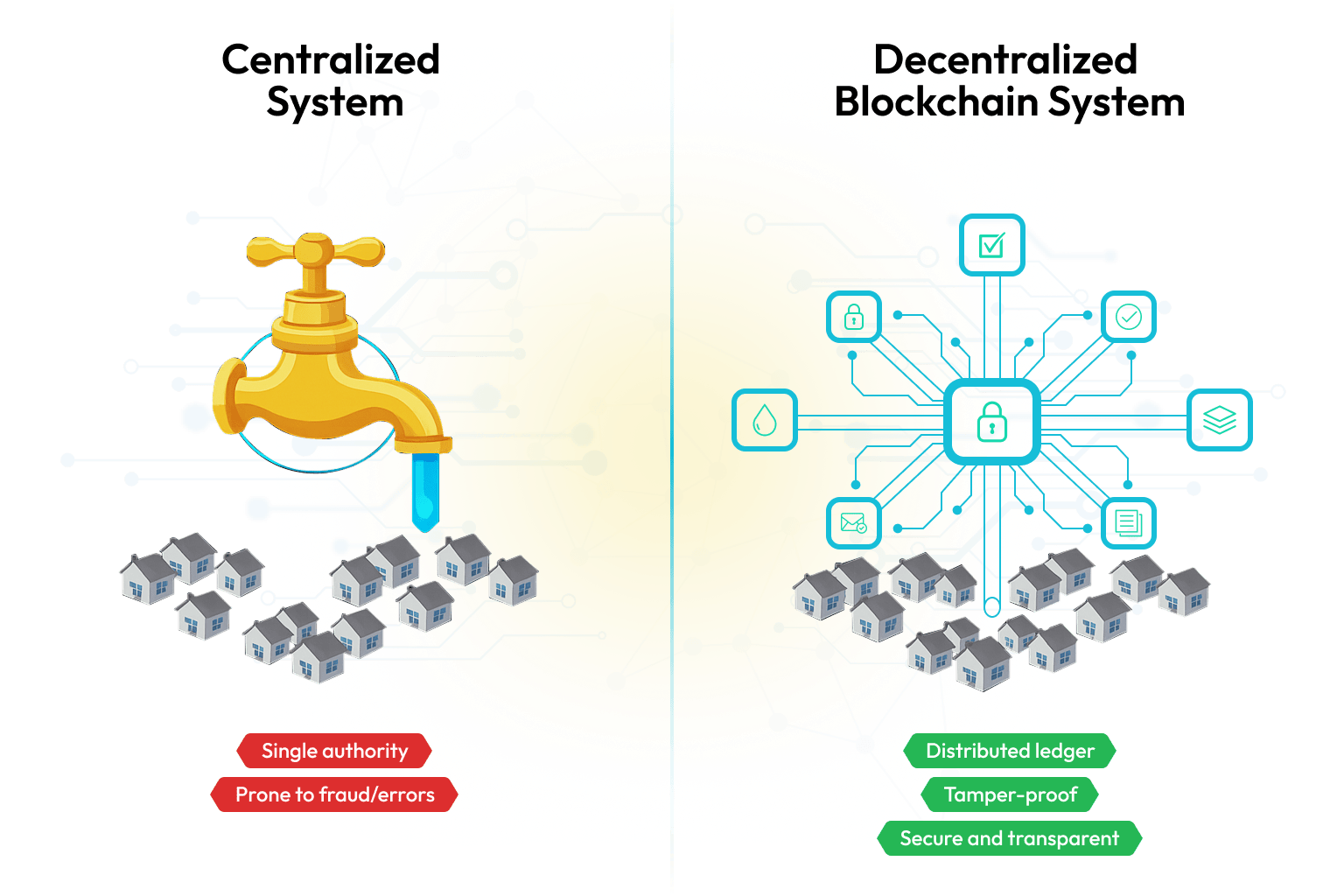
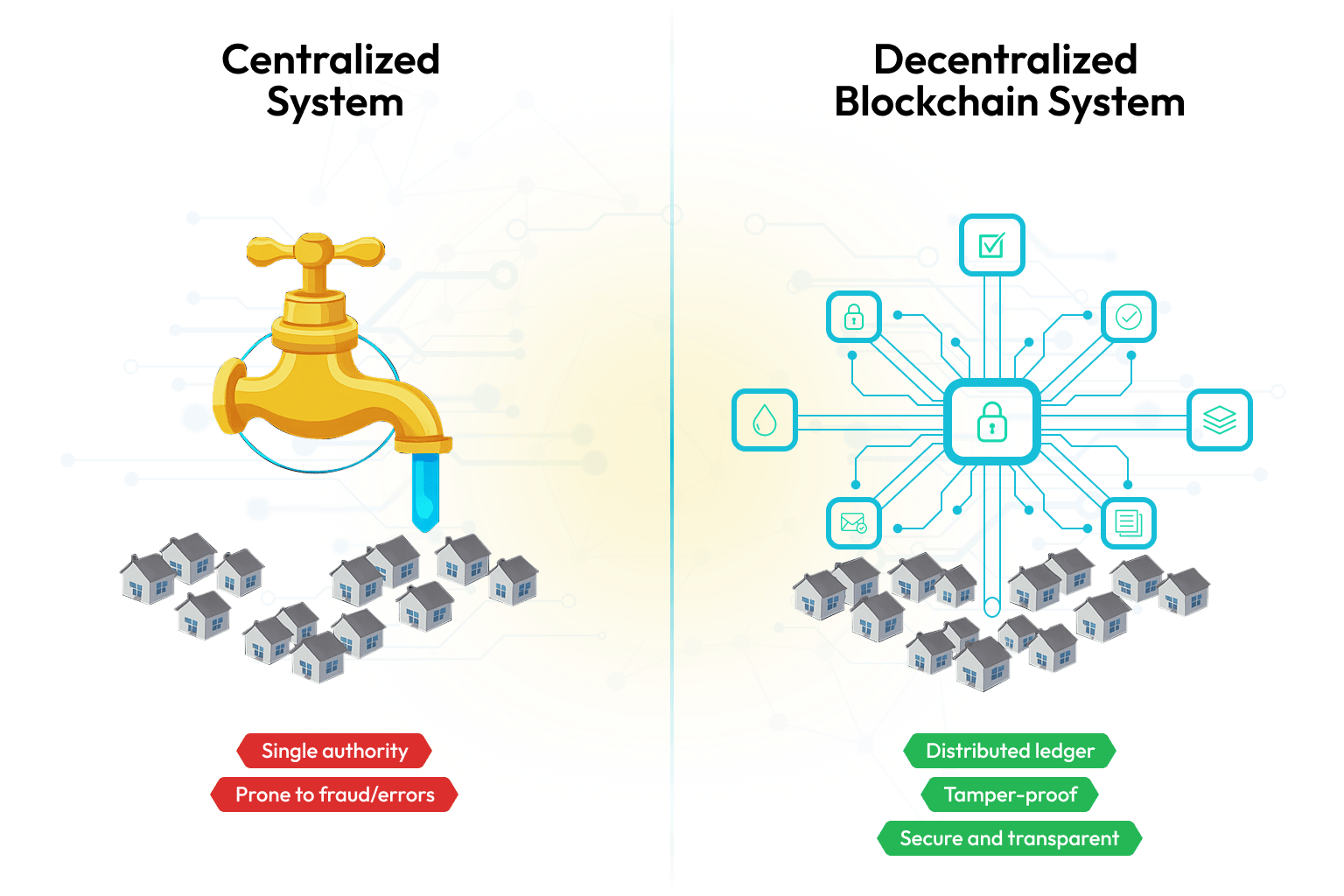
Blockchain functions as a distributed record system where every exchange is logged openly and securely. Because participants interact directly on the network, the need for middle agents is greatly reduced. This technology has the potential to transform water transactions, such as water trading and billing.
With blockchain, water transactions can be securely recorded, ensuring transparency and accountability. This can prevent fraud and enhance trust among stakeholders. Additionally, blockchain can streamline billing processes, reducing administrative costs and minimizing errors.
Moreover, the decentralized nature of blockchain ensures that no single entity has control over the entire system. This distributed ledger technology provides a higher level of security, making it difficult for malicious actors to tamper with the recorded data. As a result, blockchain offers a robust solution for maintaining the integrity of water management systems.
Blockchain Applications in Water Management
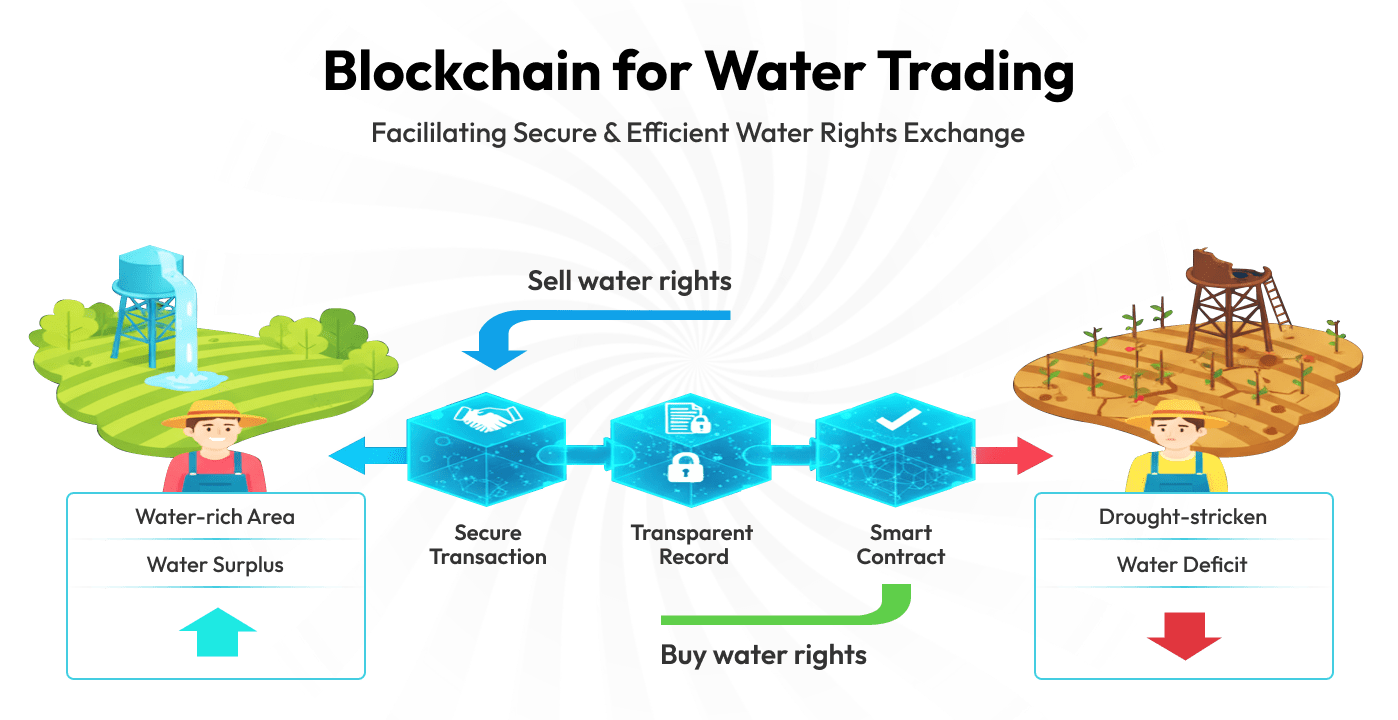
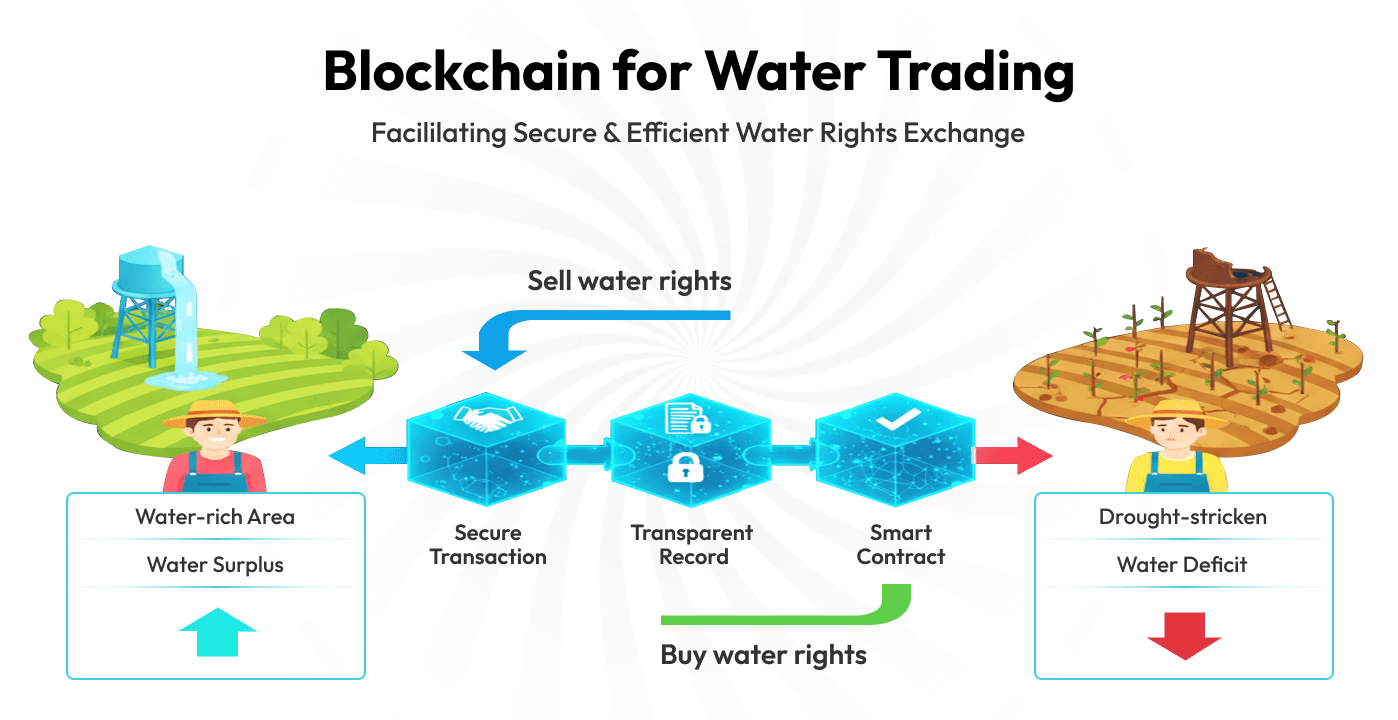
The potential applications of blockchain in water management are vast. One such application is water trading. Blockchain can facilitate the trading of water rights, allowing users to buy and sell water securely and efficiently. This can create a more flexible and adaptive water market.
Imagine a scenario where farmers in a drought-stricken region can easily trade their water rights with farmers in a water-rich area. With blockchain, these transactions can be executed seamlessly, with the recorded data providing transparency and ensuring fair trading practices. This can help optimize water allocation, ensuring that it is distributed to areas where it is most needed.
The Impact of IoT and OT on Water Sustainability
The Internet of Things (IoT) and Operational Technology (OT) have emerged as powerful tools for optimizing resource management. In the context of water sustainability, IoT and OT enable real-time monitoring, predictive maintenance, and automated control systems.
IoT and OT: A Brief Introduction
The IoT refers to the network of interconnected devices that can collect and exchange data. These devices, equipped with sensors and actuators, can monitor water quality, detect leaks, and measure consumption patterns.
On the other hand, OT encompasses the technologies used to control and manage physical processes, such as water treatment and distribution systems. OT enables automation, remote control, and predictive maintenance, ensuring the efficient operation of water infrastructure.
IoT, OT, and Their Role in Water Conservation
The synergy between IoT and OT empowers water utilities to optimize resource usage and conserve water. Real-time data collected through IoT devices allows for the early detection of leaks, reducing water loss and preventing damage to infrastructure.
Additionally, IoT and OT enable predictive maintenance, allowing water utilities to identify and address potential issues before they escalate. This not only minimizes downtime but also saves costs associated with repairs.
Furthermore, IoT technologies can provide consumers with real-time water usage data, promoting awareness and encouraging responsible water usage. The data can also be used to build real-time water billing systems devoid of fraud. This empowers individuals to make informed decisions and implement water-saving practices in their everyday lives.
Quantum Computing: A New Frontier for Water Sustainability
Quantum computing, an emerging field of technology, holds the promise of solving complex problems that are beyond the capabilities of classical computers. In the context of water sustainability, quantum computing can offer improved modelling and optimization techniques.
An Introduction to Quantum Computing
Quantum computing utilizes the principles of quantum mechanics to perform computational tasks. Unlike classical computers, which use bits for information processing, quantum computers use qubits, which can exist in multiple states simultaneously.
This unique property of qubits allows quantum computers to perform complex calculations more efficiently and accurately, enabling faster problem-solving.
Potential Applications of Quantum Computing in Water Management
Quantum computing can revolutionize water management through advanced modelling and optimization techniques. For instance, quantum algorithms can efficiently solve complex optimization problems, such as water allocation and distribution optimization.
Furthermore, simulations can provide insights into the behaviour of water systems at the molecular level. This can aid in the development of more accurate water quality models and effective pollution control strategies.
AI & Machine Learning: Revolutionizing Water Management
Artificial Intelligence (AI) and Machine Learning (ML) have gained immense popularity for their ability to analyse vast amounts of data and generate valuable insights. In the context of water management, AI and ML can optimize resource allocation, detect anomalies, and predict water availability.
Understanding AI and Machine Learning
AI refers to the development of computer systems that can perform tasks that typically require human intelligence, such as perception, reasoning, and decision-making. ML is a subset of AI that focuses on the development of algorithms that can learn from data and improve their performance over time.