In today’s fast-paced digital era, public transport is undergoing one of the most significant transformations in history. The rise of digital platform apps has revolutionized how people navigate cities, connect with services, and experience urban mobility. With the integration of innovation, IoT (Internet of Things), Artificial Intelligence (AI), blockchain, and cloud computing, public transportation networks are becoming smarter, greener, safer, and more efficient than ever before.
Understanding the Digital Transformation in Public Transport
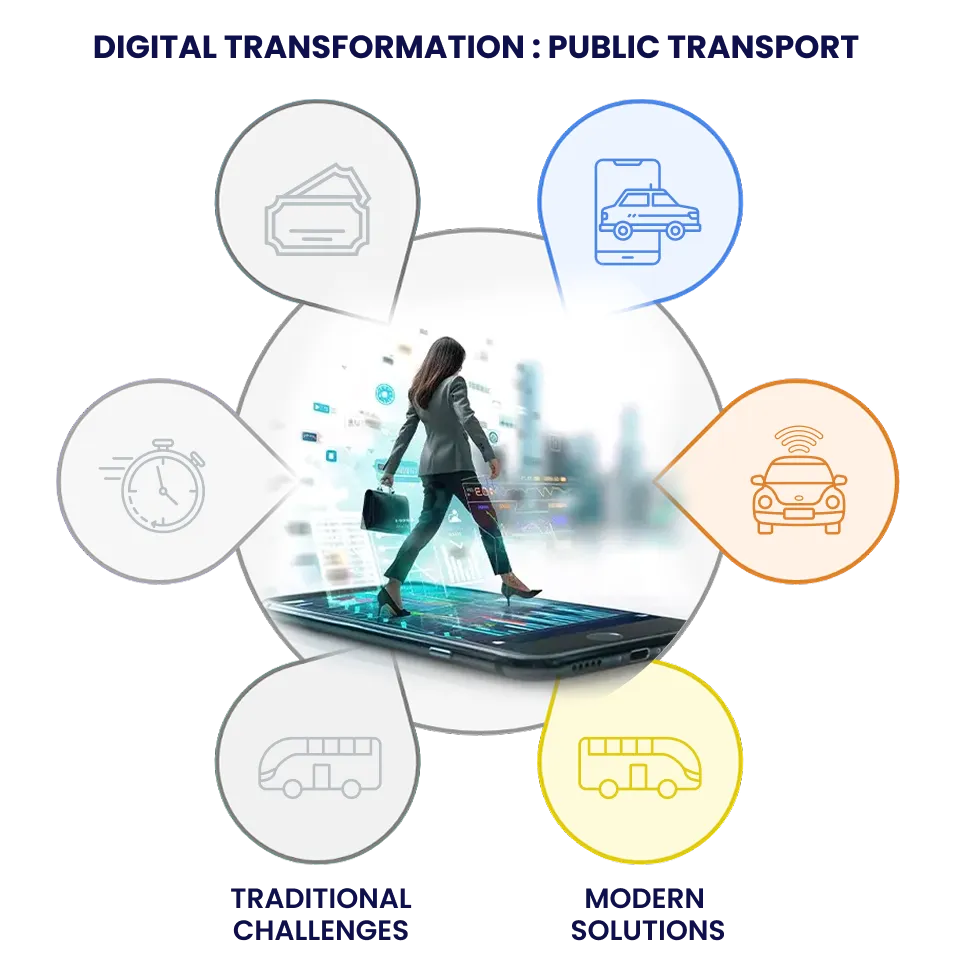
Before we delve into the exciting possibilities offered by digital platform apps, it is essential to grasp the concept of digital transformation in public transport. This revolution involves utilizing the latest technologies to optimize operations, enhance passenger experience, and make transport networks more sustainable. Public transport has traditionally faced challenges such as traffic congestion, outdated ticketing systems, lack of real-time updates, and inefficient route planning. The digital transformation seeks to overcome these hurdles by embedding intelligent technologies into the very foundation of transport systems. By embracing digital technologies, transportation authorities and companies can overcome these obstacles and create a more efficient and passenger-centric transport system. One of the key aspects of the digital transformation is the integration of data-driven decision- making processes. By collecting and analyzing data from various sources such as sensors, GPS devices, and passenger feedback, transport operators can gain valuable insights into the demand patterns, optimize routes, and allocate resources more effectively.
The Role of Innovation in Public Transport
Innovation is the driving force behind smarter transport ecosystems. From the introduction of electric buses to AI-powered ticketing and the development of futuristic hyperloop systems, innovation continues to redefine what public transport looks like. Electric buses not only reduce carbon emiThe Internet of Things (IoT) and Public Transportssions but also offer a quieter and smoother ride for passengers. These buses are equipped with advanced battery technology and regenerative braking systems, making them more energy-efficient and environmentally friendly. Smartticketing systems, on the other hand, eliminate the need for physical tickets and allow passengers to pay for their journeys using contactless payment methods such as mobile wallets or smart cards. In addition to these innovations, there are ongoing research and development efforts to explore new technologies such as autonomous vehicles and hyperloop systems. These advancements have the potential to further revolutionize public transport by improving safety, reducing travel time, and increasing capacity.
The Impact of Digital Platform Apps on Public Transport
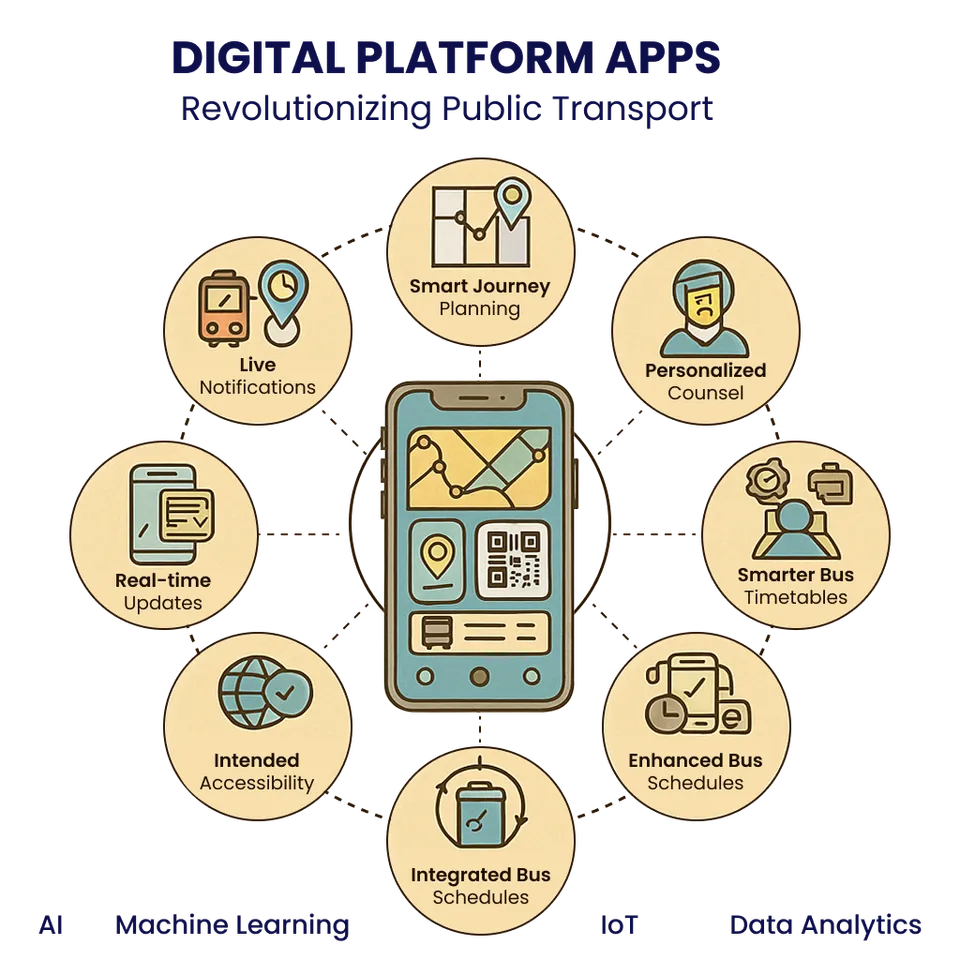
The rise of digital platform apps has had a profound impact on public transport. These apps act as a bridge between passengers and transportation providers, offering a wide array of services at the touch of a button. From journey planning and real-time updates to ticket purchases and personalized recommendations, these apps have revolutionized the way we navigate our cities. Modern apps combine real-time route planning, AI-based personalized recommendations, digital ticketing, ride-sharing options, and integration with other urban services like parking or bike rentals. This makes them indispensable tools for both daily commuters and occasional travelers. Passengers now expect live updates on traffic conditions, vehicle occupancy, and ETA predictions, all powered by data analytics and AI algorithms. The apps also enhance accessibility by supporting multi-language interfaces, accessibility features for differently-abled commuters, and personalized travel alerts. Another significant impact of digital platform apps is the ability to provide personalized recommendations and offers based on individual preferences and travel history. These apps leverage data analytics and machine learning algorithms to understand passenger behavior and provide tailored suggestions for nearby attractions, restaurants, or events. Furthermore, digital platform apps promote a seamless and integrated travel experience by allowing passengers to combine different modes of transport, such as buses, trains, and taxis, within a single app. This integration not only simplifies the planning and booking process but also encourages the use of public transport as a viable alternative to private vehicles. The digital transformation in public transport is an ongoing process that aims to leverage technology to improve efficiency, enhance passenger experience, and create sustainable transport networks. Innovation and digital platform apps are key drivers of this transformation, offering new solutions and services that revolutionize the way we travel. As technology continues to evolve, we can expect further advancements in public transport, making it more accessible, efficient, and environmentally friendly.
The Internet of Things (IoT) and Public Transport
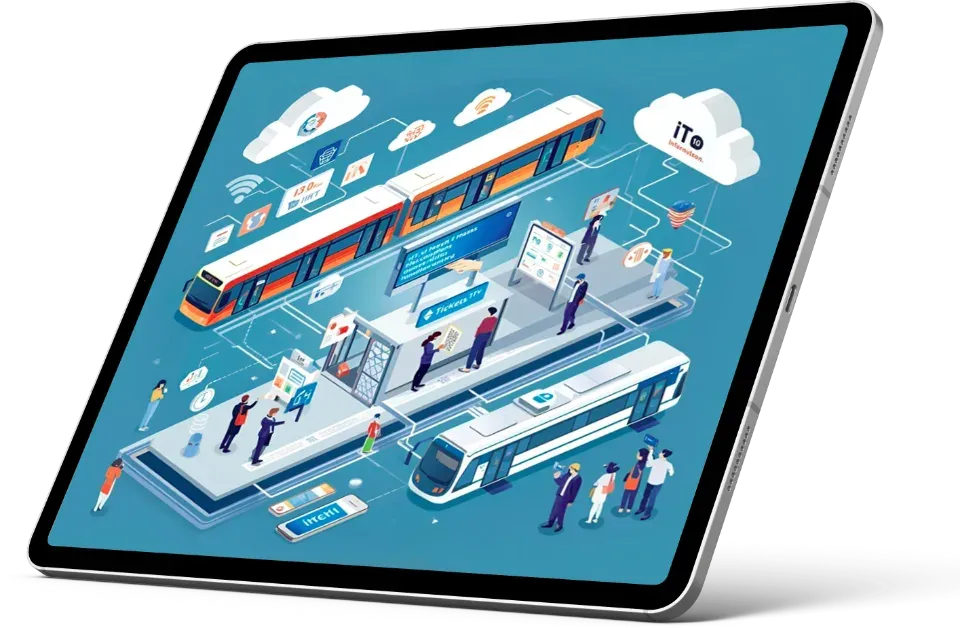
The Internet of Things (IoT) is becoming a cornerstone of modern public transport by creating highly connected and intelligent mobility ecosystems. Through the deployment of sensors and smart devices across vehicles, stations, and infrastructure, IoT enables continuous data exchange, predictive analytics, and automation, ultimately driving more efficient and responsive transit systems.
How IoT is Enhancing Public Transport Systems
As cities grow and the demand for sustainable mobility intensifies, IoT has emerged as a transformative enabler. By capturing real-time data on vehicle movements, passenger density, and environmental conditions, transport operators gain the ability to dynamically adjust operations. This includes optimizing routes, balancing capacity, and mitigating service disruptions to deliver smoother, more reliable journeys.
Consider a smart city environment where buses, trains, and trams are fully interconnected via IoT networks. Passenger flow is automatically tracked as commuters board and exit, with this information instantly transmitted to central control hubs. Operators can then analyze usage patterns to refine schedules, allocate resources effectively, and reduce congestion, ultimately improving service quality and network efficiency.
Beyond fleet management, IoT supports advanced use cases such as environmental monitoring, smart ticketing, adaptive traffic signals, real-time safety alerts, and predictive maintenance. Cities like Singapore, London, and Dubai have already deployed IoT-powered transit solutions to manage congestion, forecast peak demand, and optimize transport resources, setting benchmarks for data-driven, intelligent mobility systems.
In cities around the world, IoT applications are transforming public transport. For example, smart bus stops equipped with sensors can monitor air quality or detect overcrowding, allowing transportation authorities to take proactive measures. When sensors detect high levels of pollution, they can send alerts to nearby buses, prompting them to switch to cleaner energy sources or reroute to less polluted areas. Similarly, when overcrowding is detected, transport operators can deploy additional vehicles or adjust frequencies to ensure passenger comfort and safety.
Artificial Intelligence (AI): The Brain Behind Smart Mobility
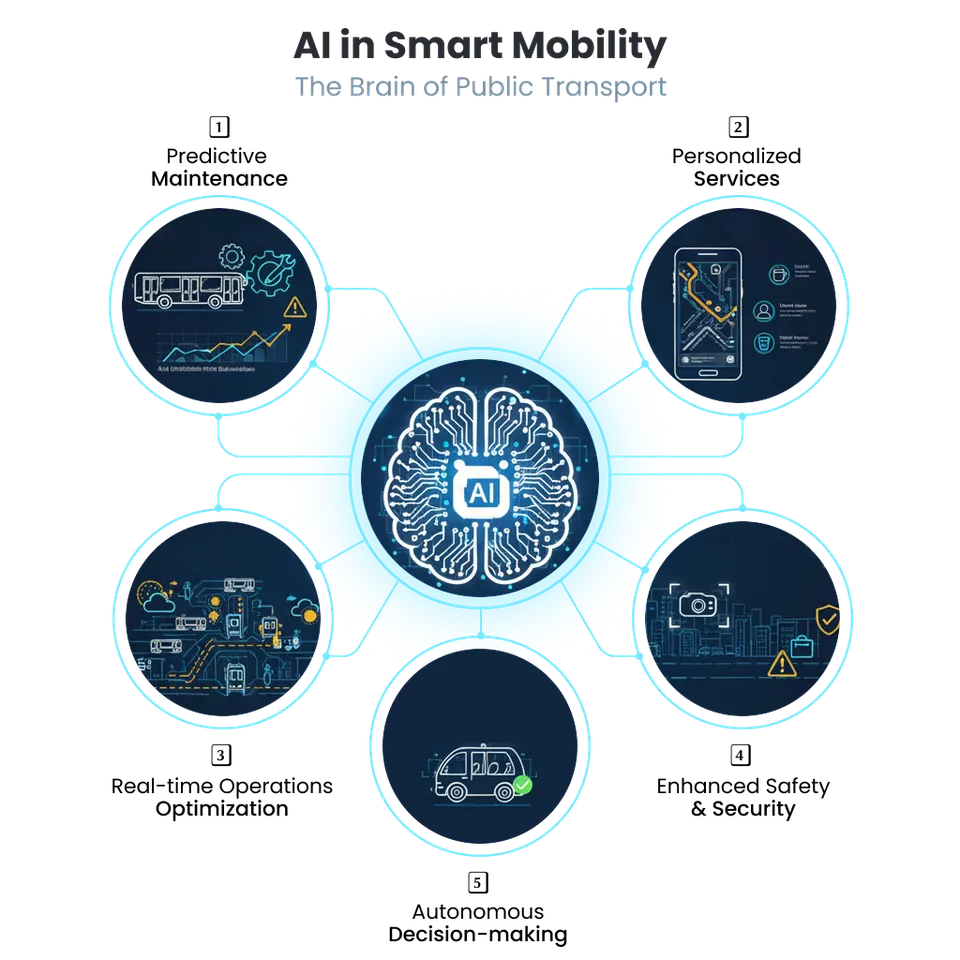
Artificial Intelligence (AI) is revolutionizing the world of public transport, bringing forth a wave of advancements that are reshaping the industry. Through the implementation of AI technologies, public transport is experiencing a paradigm shift, enabling autonomous decision-making, predictive maintenance, and personalized services.
One of the most significant impacts of AI on public transport is its ability to facilitate predictive maintenance. AI-powered predictive maintenance revolutionizes public transport by enabling operators to proactively identify potential faults and schedule maintenance, thereby minimizing service interruptions and extending the operational lifespan of vehicles and infrastructure. This ensures optimal efficiency and a seamless, reliable commuting experience for passengers.
Moreover, AI algorithms have the potential to transform the passenger experience by analyzing vast amounts of passenger data. By leveraging this data, AI can provide personalizedrecommendations for routes, fares, and other services. This level of customization enhances the passenger experience, making public transport more user-friendly and tailored to individual needs. For instance, AI algorithms can analyze a passenger's travel patterns and preferences to suggest the most efficient routes, taking into account factors such as traffic conditions and personal preferences. This not only saves time for passengers but also reduces congestion and improves overall efficiency.
AI-powered systems can also assist in real-time decision-making to optimize public transport operations. By continuously analyzing data from various sources, such as traffic sensors, weather forecasts, and passenger demand, AI algorithms can make intelligent decisions to optimize routes, schedules, and capacity allocation. This ensures that public transport services are efficiently deployed to meet the demand, reducing overcrowding and minimizing waiting times.
AI can play a crucial role in enhancing the safety and security of public transport systems. Through the use of AI-powered surveillance systems, public transport operators can monitor and analyze video feeds from cameras installed in stations and vehicles. This enables the detection of suspicious activities, such as unattended bags or unauthorized access, allowing for immediate response and preventive measures. AI algorithms can also analyze patterns of behavior to identify potential security threats, helping to maintain a safe and secure environment for passengers.
Blockchain Technology in Public Transport
Blockchain technology, most commonly associated with cryptocurrencies like Bitcoin, also has immense potential in the realm of public transport. Beyond financial applications, it can reshape how tickets, data, and operational transactions are managed across entire transit ecosystems.
The Potential of Blockchain for Secure Ticketing
Blockchain can address the issue of fraudulent tickets and enhance the security of ticketing systems. By implementing blockchain, tickets can be stored in an immutable and transparent ledger, making counterfeit tickets virtually impossible. Tamper-proof digital tickets are just the beginning, enhancing fraud prevention and building passenger trust. Imagine a system where a ticket's authenticity can be verified instantly, eliminating counterfeit issues and ensuring revenue protection for public transport operators. With integration into mobile apps and smart cards, verification can be performed even offline, ensuring uninterrupted service in areas with limited connectivity.
The ability to transfer tickets in real time creates new opportunities for ease and flexibility. A more dynamic and user-centric public transport experience would result from passengers being able to easily transfer tickets to friends or family or even resale leftover tickets on a safe, integrated marketplace. Smart contracts can automate refund policies, partial transfers, and bulk corporate ticketing, expanding the use cases beyond one-to-one transfers. This encourages increased use of the current infrastructure, which supports sustainable urban mobility.
The power of smart contracts is transformative for the entire transportation ecosystem. Automated settlements can significantly cut down on processing delays and administrative overhead for all parties involved, including local governments, fuel suppliers, maintenance providers, bus operators, and train networks. A smart contract might, for instance, automatically pay a bus operator once a predetermined number of trips are finished and confirmed on the blockchain, or it might pay a maintenance company when a repair is successfully finished. These contracts can also incorporate performance-based incentives, penalties, and multi-party approvals, ensuring transparency across complex vendor relationships. This fosters greater operational efficiency and financial transparency.
Proposed Actions for Leveraging Blockchain in Public Transport:
-
Pilot programs for blockchain-based ticketing: Start with a specific route or region to test the technology's effectiveness in managing ticket sales, transfers, and validation.
Blockchain for Transparent and Efficient Operations
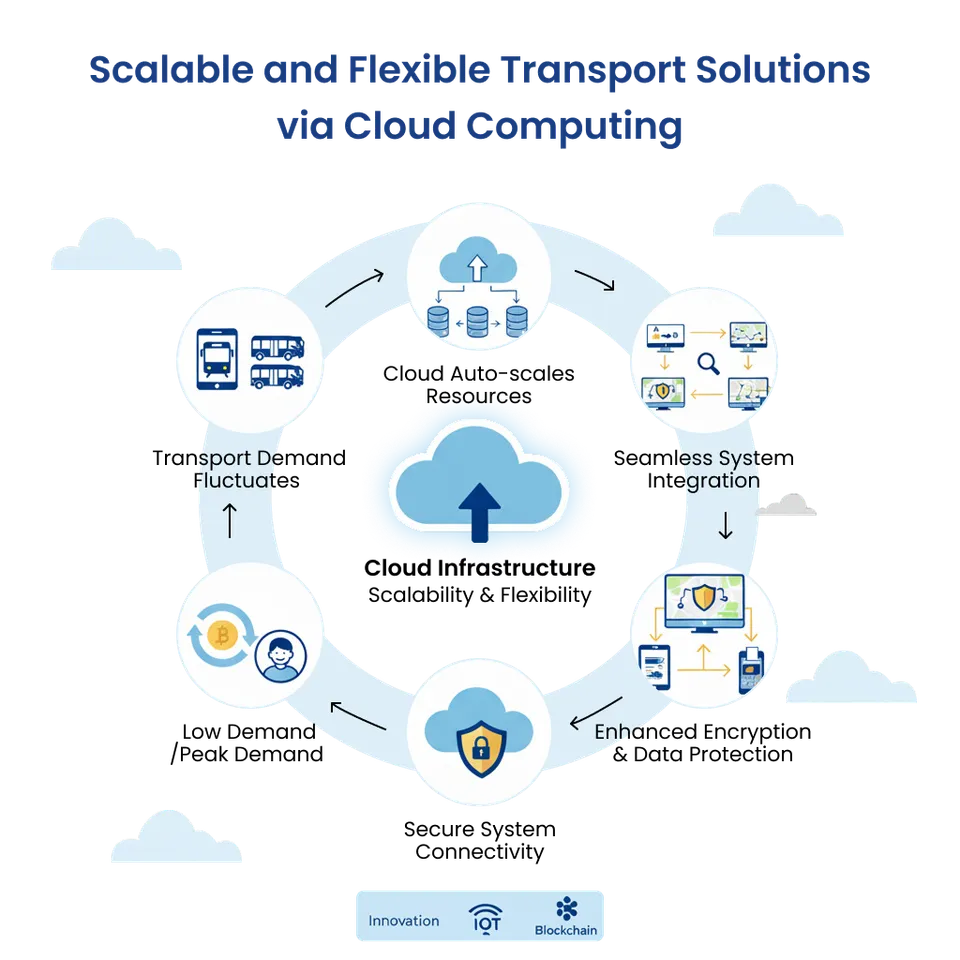
In addition to secure ticketing, blockchain holds promise for streamlining and improving various operational aspects of public transport. For instance, by leveraging smart contracts, blockchain can facilitate automated payments between transportation providers, reducing administrative overhead and enhancing efficiency. It can also provide auditable trails for subsidies, grants, and cross-agency funding flows, improving public accountability. Blockchain also supports loyalty programs, carbon credit tracking, and cross-border ticket validation, which are particularly valuable in international travel or smart city collaborations. When combined with IoT sensors and AI, blockchain can ensure that passenger counts, environmental data, and operational metrics recorded are tamper-proof, creating a trusted “single source of truth” for regulators and service providers. Cloud computing has become an integral part of many industries, and public transport is no exception. It offers numerous benefits, including scalable infrastructure, enhanced data management, and flexible solutions.
How Cloud Computing Supports Data Management in Public Transport
Massive volumes of data are produced by public transport networks, including vehicle telemetryand passenger information. A safe, centralised platform for effective data analysis, storage, and use is provided by cloud computing. It also enables predictive analytics, helping authorities forecast demand, manage fleet maintenance schedules, and optimise routes in real time. Real-time insights are available to transport authorities, empowering them to take preventive measures and enhance overall operations. With edge computing integration, latency is reduced, allowing even faster decision-making at the point of data collection.
Cloud Computing for Scalable and Flexible Transport Solutions

Empowering Transit Innovation with Datopic’s Edge-Driven Architecture
At Datopic Technologies, we believe digital transformation is meaningful only when it enhances mobility, safety, and sustainability — our IoT, AI, blockchain, and cloud solutions ensure public transport is smarter, greener, and more passenger-centric.
👉 Explore Services
👉 Request a Consultation
Let Datopic help you build the edge-first architecture your users deserve.