

Billions of dollars flow through smart contracts every single day. From powering decentralized finance (DeFi) apps to enabling transparent voting systems, these bits of code are quickly becoming the backbone of blockchain technology. But here’s the catch: one tiny bug in a smart contract can drain millions in minutes. According to Chainalysis, over $24 billion was lost to smart contract exploits and crypto-related hacks between 2021 and 2023.
That’s why analyzing and auditing smart contracts isn’t just “good practice” — it’s a matter of survival for projects and trust in the blockchain ecosystem. Before we dive into the challenges of analyzing them, let’s take a step back and understand what smart contracts really are, and why they’re such a game-changer.
Understanding Smart Contracts

Before dissecting the intricacies and potential shortcomings of current analysis methods, it's crucial to gain a fundamental understanding of what smart contracts are and how they operate.
Smart contracts are self-executing contracts with the terms of the agreement directly written into lines of code. This coded agreement facilitates and enforces the execution of the contract, therefore, eliminating the need for a middleman.
But what exactly does it mean for a contract to be "self-executing"? Well, it means that once the conditions specified in the code are met, the contract automatically executes itself without any external intervention. This automation brings efficiency and reliability to the contracting process.
Key features of smart contracts include:
- Immutability: Once deployed on a blockchain, a smart contract's terms and execution become virtually unalterable. This is due to the underlying blockchain technology, which decentralizes the recording and storage of the contract's code and execution history.
- Transparency: Smart contracts offer transparency to all involved parties. Their code is stored on the blockchain, making it accessible for anyone to review. This fosters trust, as parties can verify that the contract will be executed precisely as agreed.
- Security: Runs on decentralized blockchain networks that are resistant to censorship, fraud, and unauthorized modifications.
- Efficiency & Automation: Eliminates manual intervention, reducing time and costs for processes like payments, settlements, and record-keeping.

The Role of Smart Contracts in Blockchain Technology
The decentralized nature of blockchain technology and the inherent transparency and security it provides are perfectly complemented by the use of smart contracts. These contracts form the backbone of many blockchain applications, by ensuring the creation of a trustworthy, efficient, and autonomous decentralized ecosystem.
Imagine a financial system where transactions are executed automatically once predefined conditions are met, without the need for intermediaries such as banks. This is exactly what smart contracts enable. They allow for the creation of decentralized financial applications, often referred to as DeFi, where users can lend, borrow, and trade digital assets directly with each other, without relying on traditional financial institutions.
But the potential of smart contracts goes beyond just finance. They can revolutionize supply chain management by automating and streamlining processes such as tracking and verifying the origin and authenticity of products. This can help in reducing counterfeiting and ensuring that consumers have access to genuine and high-quality goods.
In the realm of governance, smart contracts can enable transparent and tamper-proof voting systems. By deploying voting mechanisms on a blockchain, the integrity of the voting process can be ensured, eliminating possibilities of fraud or manipulation. This has the potential to enhance democracy and trust in electoral systems.
Overall, smart contracts unlock immense potential in various fields by creating a trusted environment without requiring trust between the involved parties. They bring automation, transparency, and efficiency to the world of contracts, paving the way for a new era of decentralized applications and systems.
The Importance of Smart Contract Analysis
As the bread and butter in the blockchain ecosystem, the importance of thoroughly analyzing and auditing smart contracts cannot be overstated. The following sections explore why this analysis is so critical.
Ensuring Security in Smart Contracts
Despite their countless benefits, smart contracts are not invulnerable. Like any software or code, they can bear bugs and vulnerabilities. A flawed smart contract can cause substantial financial damages and tarnish the credibility of the network.
For example, in 2016, a flaw in a smart contract called The DAO led to the theft of millions of dollars worth of cryptocurrency. This incident highlighted the need for rigorous analysis and auditing of smart contracts to prevent such vulnerabilities.
A robust analysis can help detect these potential flaws early on, ensuring the security of the smart contract and preserving the integrity of the blockchain. By conducting thorough code reviews, analyzing potential attack vectors, and performing extensive testing, developers can identify and mitigate security risks before deploying the smart contract.
Detecting and Preventing Fraud in Smart Contracts
While smart contracts inherently enhance transparency and deter fraudulent behaviors, the tech-savvy with malicious intent might exploit their vulnerabilities. This is especially true in areas such as Initial Coin Offerings (ICOs), where fund allocation and token distribution are handled through smart contracts.
By conducting in-depth and methodical smart contract analysis, potential loopholes can be identified and addressed, drastically reducing the risk of fraud. For example, a thorough analysis can uncover vulnerabilities that could allow an attacker to manipulate token distribution or siphon funds from the contract.
One notable case of fraud prevention through smart contract analysis is the Parity wallet hack in 2017. By analyzing the smart contract code, security researchers discovered a vulnerability that allowed an attacker to freeze and steal millions of dollars worth of cryptocurrency. This incident emphasized the importance of rigorous analysis to prevent such exploits.
Furthermore, smart contract analysis can also help ensure compliance with regulations. By thoroughly examining the code and verifying that it aligns with legal requirements, organizations can avoid legal complications and potential penalties.
Enhancing Reliability and Efficiency
Smart contract analysis not only focuses on security and fraud prevention but also plays a crucial role in enhancing the reliability and efficiency of the contract's execution.
The Current State of Manual Smart Contract Analysis

The current state of smart contract analysis largely involves manual methods. However, these methods are wrought with challenges and limitations.
Smart contracts have gained significant popularity in recent years, offering a decentralized and transparent way of executing agreements. However, the complexity and security risks associated with these contracts require thorough analysis and scrutiny.
Common Methods Used in Manual Analysis
The most common method of manual smart contract analysis is code review. Here, an analyst manually combs through the contract's code, looking for any bugs or vulnerabilities. These analysts often use guidelines and best practices as a roadmap during their review.
During the code review process, analysts pay close attention to potential security vulnerabilities, such as reentrancy attacks, integer overflow, or unchecked external calls. They also evaluate the contract's logic and assess its compliance with industry standards and best practices.
Additionally, manual analysis involves reviewing the contract's documentation, including its specifications and requirements. This helps ensure that the contract meets the intended functionality and aligns with the overall system architecture.
This is a time-consuming and resource-intensive process, with the effectiveness largely dependent on the analyst’s experience and knowledge.
Limitations and Challenges in Current Practices
Manual smart contract analysis faces significant limitations that stem from the inherent complexity of smart contracts. Thoroughness is paramount, as even minor bugs can be easily overlooked, demanding meticulous attention to detail.
Key problems include:
- Human Error: Manual analysis is susceptible to human error. Analysts may inadvertently miss vulnerabilities or fail to account for all potential attack vectors, leaving smart contracts exposed to security breaches.
- This process is time-intensive and struggles to keep pace with the rapidly increasing demand for smart contract implementation. As more smart contracts are deployed, manual analysis becomes an increasingly challenging bottleneck.
Case Studies of Manual Smart Contract Analysis Failures
Unfortunately, the limitations of manual smart contract analysis have led to real-world consequences. The following sections describe some notable breaches and lessons learned from them.
Notable Breaches and Their Impact
In this attack, Cetus on the Sui blockchain lost over $220 million via a combined token spoofing + overflow bug. The attacker used malicious/fake tokens to trick the system, and flaws in the math library allowed exploitation. Some of the stolen assets (≈71%) were frozen or recovered.
In February 2024, the gaming/NFT platform PlayDapp was hit by a major exploit. Attackers exploited an access control vulnerability in the smart contract: they gained rights to mint new PLA tokens. In two separate transactions they minted 200 million PLA tokens (≈ $36.5 million) and then 1.59 billion PLA tokens (≈ $253.9 million).
These incidents serve as severe reminders of the consequences when smart contract analysis falls short. They highlight the criticality of implementing rigorous security measures, conducting comprehensive code reviews, and utilizing automated tools to identify potential vulnerabilities.

Lessons Learned from Past Failures
Past failures and shortcomings are valuable learning tools, driving improvements in analysis methods and highlighting the urgent need for more refined, exhaustive, and efficient processes.
Key lessons from these past incidents include:
- Involving Security Experts and Independent Audits: Engaging external professionals with expertise in smart contract security can help identify vulnerabilities often missed during manual analysis.
- Implementing Safeguards: Case studies emphasize the necessity of protective measures against risks from failed smart contract analyses. Strategies such as multi-signature wallets, regular security audits, and responsible vulnerability disclosure can mitigate the impact of future breaches.
- Promoting Community Collaboration and Knowledge Sharing: These incidents underscore the importance of the blockchain community uniting to share best practices, develop standardized security protocols, and establish platforms for vulnerability reporting. Various platforms run bug bounty programs where white-hat hackers have earned by responsibly disclosing smart contract vulnerabilities.
In conclusion, the failures in manual smart contract analysis have had far-reaching consequences, both in terms of financial losses and the erosion of trust in blockchain technology. However, these incidents have also served as catalysts for improvement and have led to a greater focus on security measures and best practices. By learning from past failures, the industry can strive towards a more secure and reliable ecosystem for smart contracts.
The Future of Smart Contract Analysis
As with many facets of technology, the future seems to hold the key to overcoming current limitations. The world of smart contract analysis is no exception.
In recent years, the rise of blockchain technology has brought about a surge in the use of smart contracts. These self-executing contracts, stored on a decentralized ledger, have the potential to revolutionize various industries, from finance to supply chain management.
However, as with any new technology, smart contracts come with their own set of challenges. One of the main concerns is the security and reliability of these contracts. Given their autonomous nature, it is crucial to ensure that smart contracts are free from vulnerabilities and potential exploits.
The Role of Automation in Smart Contract Analysis
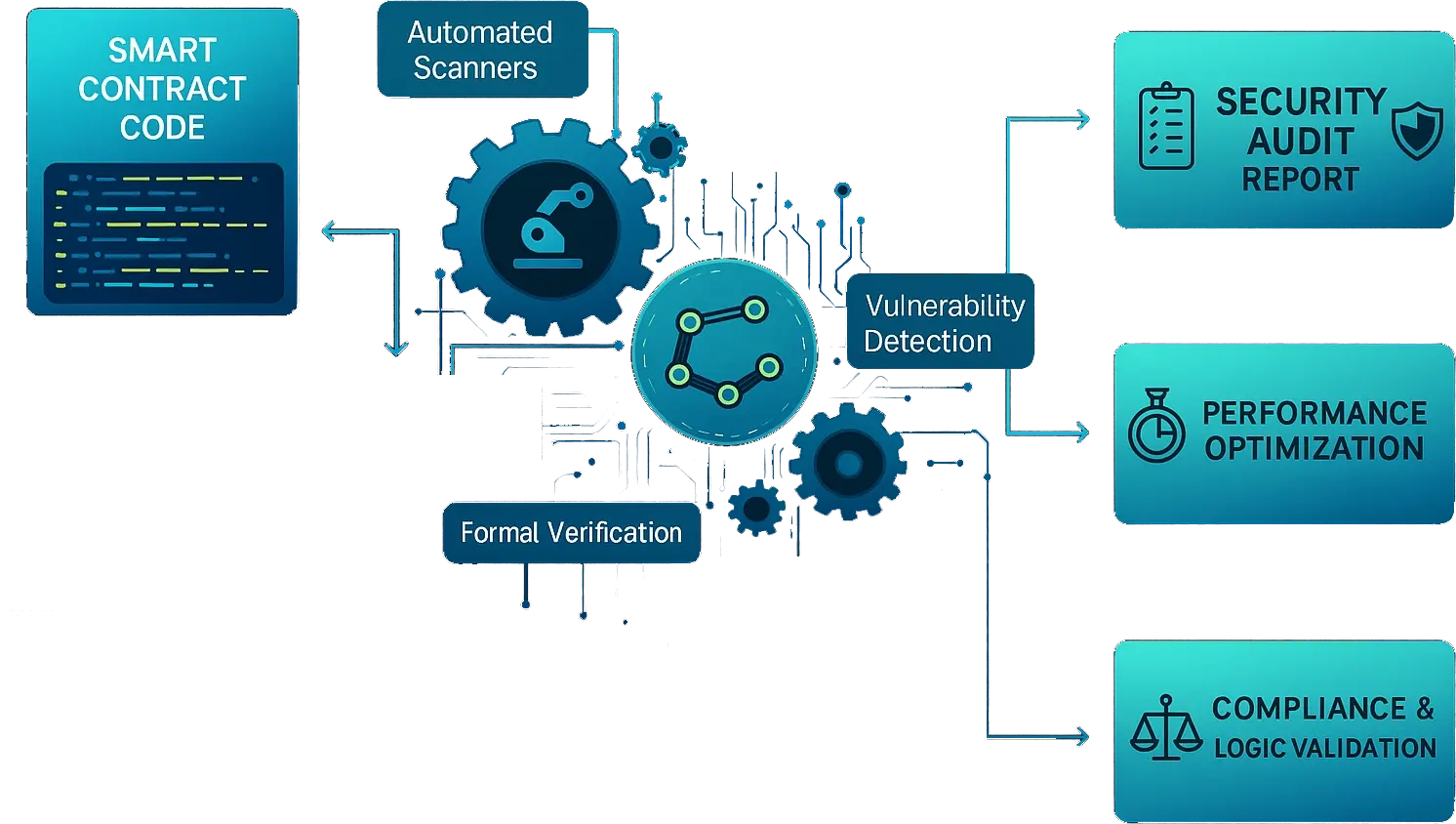
Automation presents a promising solution. Automated methods of smart contract analysis can cover a broader scope faster and more efficiently, eliminating human error. While we're already seeing tools and platforms that offer automated analysis, their use is still in its early stages.
Imagine a future where smart contracts can be thoroughly analyzed and audited within minutes, rather than days or weeks. This level of automation would not only save time and resources but also provide a higher level of confidence in the security of smart contracts.
Moreover, automated analysis can help identify potential issues that may arise during the execution of smart contracts. By simulating different scenarios and testing various inputs, these tools can detect vulnerabilities that might otherwise go unnoticed.

Secure Your Smart Contracts with Datopic
Manual analysis has clear limitations. At Datopic Technologies, we enhance security through automated, reliable, and intelligence-driven smart contract analysis, helping you detect vulnerabilities faster and with greater accuracy.
👉 Explore Services
👉 Request a Consultation
Partner with Datopic to strengthen your blockchain applications with confidence.