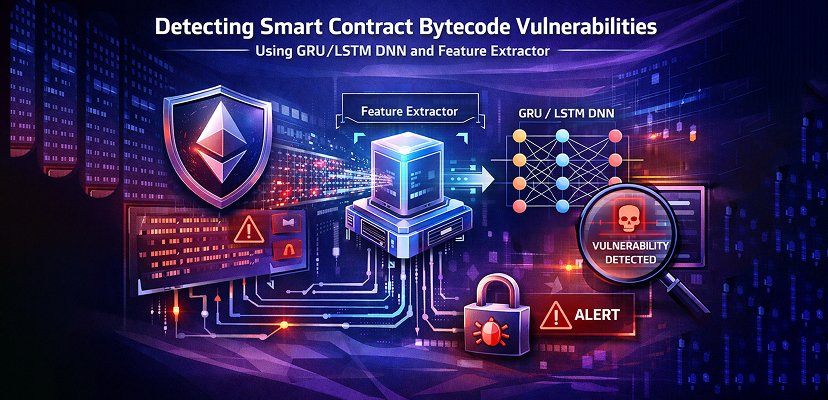

The field of smart contract analysis has gained significant importance in recent years, as organizations and individuals increasingly rely on blockchain technology for various purposes. Smart contract analyzers play a vital role in ensuring the security and reliability of smart contracts by detecting potential vulnerabilities and providing valuable insights. In this article, we will delve into the world of smart contract analyzers, exploring their functionality, key features, and the different analysis techniques used. Moreover, we will also discuss the ongoing research and developments in this field and how they contribute to improving threat information availability. So, let's begin by understanding the importance of smart contract analyzers..

Understanding Smart Contract Analyzers
Smart contract analyzers are software tools designed to identify and assess risks associated with smart contracts. They employ various analysis techniques to thoroughly examine the code and detect potential vulnerabilities or weaknesses. By analyzing smart contracts, these tools help users make informed decisions about deploying or interacting with them. Additionally, they assist in identifying compliance issues and ensuring that contracts adhere to established standards and best practices.
Smart contract analyzers play a crucial role in the development and deployment of smart contracts. They enhance the security and reliability of these contracts by providing a systematic and automated approach to identifying vulnerabilities and potential risks that may be difficult to detect through manual code review.
One of the primary advantages of using smart contract analyzers is their ability to detect common programming errors. These errors, such as reentrancy and overflow bugs, can have serious consequences if not identified and addressed. Smart contract analyzers analyze the code and flag any potential vulnerabilities, allowing developers to fix them before deploying the contract.
However, smart contract analyzers go beyond identifying simple programming errors. They are capable of detecting more complex vulnerabilities like logic flaws and authorization issues. These vulnerabilities can be challenging to identify through manual code review alone, making analyzers an invaluable tool for ensuring the security and reliability of smart contracts.
The Role of Smart Contract Analyzers

The primary role of smart contract analyzers is to enhance the security and reliability of smart contracts. They provide a systematic and automated approach to identifying vulnerabilities and potential risks that may be difficult to detect through manual code review. By analyzing the code, these tools can detect common programming errors, such as reentrancy and overflow bugs, as well as more complex vulnerabilities like logic flaws and authorization issues.
In addition to identifying vulnerabilities, smart contract analyzers also provide recommendations and best practices to mitigate the discovered risks. These recommendations help developers and auditors understand the potential impact of the vulnerabilities and guide them in making necessary modifications to the code to enhance security.
Smart contract analyzers also play a crucial role in ensuring compliance with established standards and best practices. They analyze the code against these standards and flag any non compliance issues, allowing developers to rectify them before deployment. This helps in maintaining the integrity of the smart contract ecosystem and fostering trust among users.

Key Features of Effective Smart Contract Analyzers
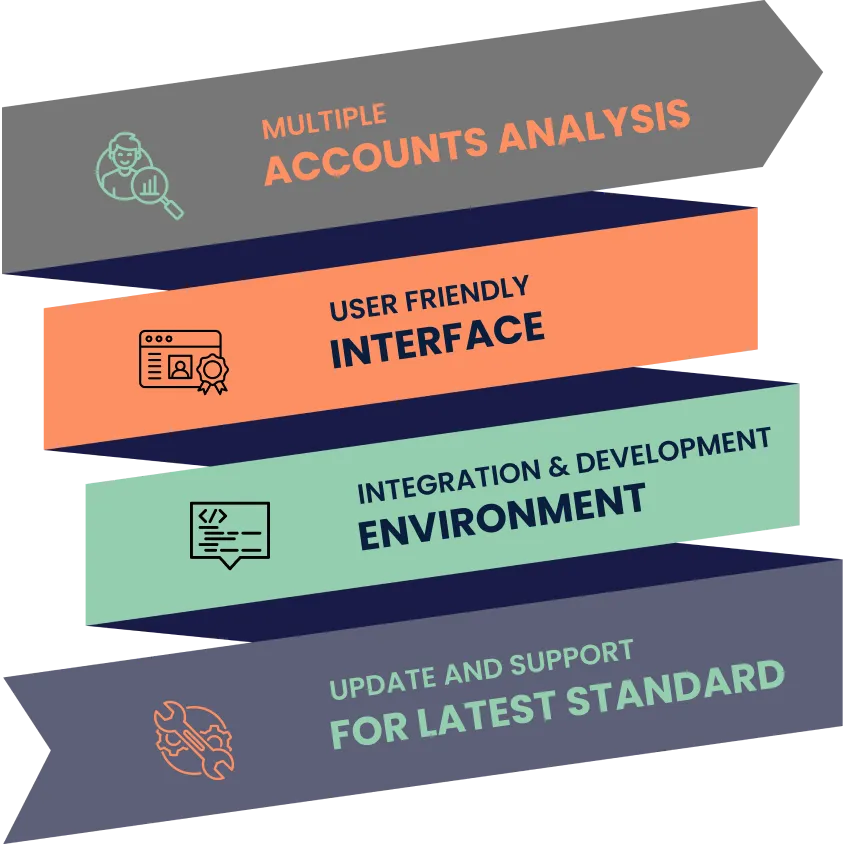
An effective smart contract analyzer should possess certain key features to ensure comprehensive analysis and accurate results.
-
Multiple Analysis
It should support multiple analysis techniques to cover a wide range of vulnerabilities and risks. By employing diverse analysis techniques—such as static analysis, symbolic analysis, formal analysis, dynamic analysis, and machine learning analysis—these tools can provide in-depth insights into the contract's behavior and identify vulnerabilities from different perspectives. -
User-friendly
Smart contract analyzers should have a user-friendly interface that enables easy interaction and interpretation of analysis results. A well-designed interface with intuitive visualization helps developers and auditors identify potential issues and understand the impact of vulnerabilities more effectively. -
Integration and Development Environments
Integration with existing development environments and deployment platforms is crucial. Seamless integration allows developers to analyze contracts during the development process, enabling them to identify and fix potential vulnerabilities early on. Integrated analyzers can also provide real-time feedback, reducing the time and effort required for manual analysis and audits. -
Updates and Support for Latest Standards
Smart contract platforms and technologies evolve rapidly, and effective analyzers should accommodate these changes to provide accurate analysis results. Regular updates ensure that the analyzer remains relevant and effective in detecting the latest vulnerabilities and risks.
Deep Dive into Analysis Techniques
Now that we have a basic understanding of smart contract analyzers, let's delve deeper into the various analysis techniques employed by these tools. Each technique offers distinct advantages and insights into the behavior and security of smart contracts. By combining these techniques, analyzers can provide a comprehensive and accurate analysis of the contracts. Let's explore each technique in more detail.
1. Static Analysis: An Overview
Static analysis involves examining the smart contract's source code without executing it. This technique aims to identify potential vulnerabilities by analyzing the contract's structure, composition, and dependencies. Static analysis tools detect issues such as uninitialized variables, improper memory handling, and potential arithmetic and logical errors. By uncovering these vulnerabilities, static analysis helps developers enhance code quality and security.
For example, static analysis can identify cases where variables are not properly initialized, which can lead to unexpected behavior or vulnerabilities. It can also detect instances where memory is not allocated or released correctly, which can result in memory leaks or other memory-related issues. Additionally, static analysis can flag potential errors in arithmetic and logical operations, such as division by zero or incorrect conditional statements.
By providing developers with insights into these potential vulnerabilities, static analysis empowers them to make informed decisions and improve the overall security of their smart contracts.
2. Symbolic Analysis: Benefits and Limitations
Symbolic analysis extends the static analysis approach by considering the contract's behavior under different conditions and inputs. This technique represents program states symbolically and explores various execution paths to identify vulnerabilities. Symbolic analysis can identify vulnerabilities that may only manifest under specific conditions, uncovering complex bugs that traditional static analysis may miss.
For example, symbolic analysis can identify vulnerabilities that are only triggered when certain conditions are met, such as a specific value being passed to a function or a particular sequence of function calls. By exploring different execution paths, symbolic analysis can uncover these vulnerabilities and provide developers with a more comprehensive understanding of their smart contracts' security.
Research and Developments in Smart Contract Analysis
The field of smart contract analysis is continuously evolving, with researchers and developers exploring new techniques and approaches to enhance security and reliability. Let's take a look at some of the recent advances in this field and their impact.
Recent Advances in Smart Contract Analysis
Researchers have made significant progress in developing intelligent smart contract analyzers that leverage machine learning and natural language processing (NLP) techniques. These analyzers can understand contract semantics and detect vulnerabilities with higher accuracy and efficiency. By analyzing the code and identifying potential security risks, these advanced analyzers contribute to the overall improvement of smart contract security.
One notable development in smart contract analysis is the integration of formal verification methods. Formal verification techniques, such as model checking and theorem proving, allow for a rigorous and mathematically sound analysis of smart contracts. By applying these methods, researchers can verify the correctness of contract behavior and ensure that all possible scenarios have been considered. This approach greatly enhances the reliability and trustworthiness of smart contracts.
Another area of active research is the development of automated tools for smart contract analysis. These tools aim to simplify the analysis process and make it accessible to a wider range of developers. By providing user-friendly interfaces and automated workflows, these tools enable developers to easily assess the security and reliability of their smart contracts—even without extensive knowledge of formal methods or advanced programming techniques.
Furthermore, ongoing research focuses on improving the scalability and performance of existing analysis techniques. As the complexity and size of smart contracts continue to grow, it becomes crucial to develop analysis methods that can handle large-scale contracts efficiently. By optimizing algorithms and leveraging parallel computing, researchers are working towards enabling faster and more thorough assessments of complex smart contracts.
Case Studies of Successful Smart Contract Analysis
Several case studies have demonstrated the effectiveness and value of smart contract analysis.
In one case study, a smart contract analyzer identified a critical vulnerability in a widely deployed contract that could have resulted in substantial financial loss. The prompt detection of the vulnerability enabled the developers to rectify the issue before any harm could occur.
Improving Threat Information Availability
While smart contract analyzers provide valuable insights into vulnerabilities and risks, it is equally essential to ensure the availability of threat information to address the discovered issues effectively. Let's explore why improved threat information availability is crucial and strategies to achieve it.
The Need for Improved Threat Information Availability
Threats and vulnerabilities are ever-evolving, and attackers constantly devise new techniques to exploit smart contracts. To effectively protect against these threats, developers and auditors need access to up-to-date information about emerging vulnerabilities and attack vectors. Improved threat information availability allows timely response and mitigation, reducing the likelihood of successful attacks and financial losses.
In the rapidly evolving landscape of smart contract security, staying informed about the latest threats is crucial. By understanding emerging vulnerabilities and attack patterns, developers can proactively address potential risks and strengthen the security of their smart contracts. With improved threat information availability, developers can make informed decisions about the best security practices to implement and ensure the integrity of their contracts.
Moreover, improved threat information availability fosters collaboration among developers, auditors, and security researchers. By sharing information about vulnerabilities and attack techniques, stakeholders can collectively work towards effective mitigation strategies. This collaborative approach not only enhances the overall security of smart contracts but also promotes knowledge sharing and learning within the community.
Strategies for Enhancing Threat Information Availability
To enhance threat information availability, it is crucial to establish effective channels for disseminating information about emerging vulnerabilities and attack patterns. Collaborative platforms, such as online forums and communities, enable sharing of information among developers, auditors, and security researchers. These platforms provide a space for discussions, knowledge exchange, and the dissemination of best practices in smart contract security.
Additionally, regular updates from smart contract platform providers and security organizations play a significant role in keeping stakeholders informed about the latest threats and mitigation strategies. These updates can include information about newly discovered vulnerabilities, patches, and recommended security measures. By actively seeking out and staying updated with these updates, developers and auditors can stay one step ahead of potential attackers.

Future Trends in Smart Contract Analysis
The field of smart contract analysis shows great potential for further advancements. Let's explore some predicted trends in analysis techniques and the role of artificial intelligence and machine learning in shaping future developments.
Predictions for the Evolution of Analysis Techniques
As smart contract technology evolves, analysis techniques are expected to become increasingly sophisticated and accurate. Researchers and developers will likely focus on addressing the limitations of existing techniques, such as scalability and efficiency, to accommodate larger and more complex smart contracts. Additionally, the integration of multiple analysis techniques and the development of hybrid approaches may become more common to achieve better coverage and enhance overall security.
The Role of AI and Machine Learning in Future Developments
Artificial intelligence (AI) and machine learning (ML) will play a pivotal role in the future of smart contract analysis. ML algorithms can process vast amounts of smart contract data and detect patterns that may not be easily recognized by humans. This enables automated detection of common vulnerabilities and identification of emerging threats. Furthermore, AI-powered analyzers can adapt and learn from newly discovered vulnerabilities, continually improving their detection capabilities and enhancing threat prevention.
In conclusion, smart contract analyzers are essential tools for improving the security and reliability of smart contracts. By leveraging a combination of analysis techniques—such as static analysis, symbolic analysis, formal analysis, dynamic analysis, and machine learning—these tools provide comprehensive insights into potential vulnerabilities and risks. Ongoing research and developments further improve threat information availability, enabling stakeholders to make informed decisions and take proactive measures. The future of smart contract analysis holds significant potential, with advancements in techniques and the integration of AI and ML poised to shape the field and drive stronger security outcomes in the blockchain ecosystem.

Build Safer Smart Contracts with Datopic’s AI-Driven Analysis and Threat Intelligence
At Datopic Technologies,we believe blockchain security thrives when smart contracts are reliable, transparent, and resilient — our smart contract analyzers and AI-driven tools ensure vulnerabilities are detected early, risks are mitigated, and decentralized applications remain trustworthy and secure.
👉 Explore Services
👉 Request a Consultation
Let Datopic help you build the edge-first architecture your users deserve.