
In this comprehensive guide, we will explore the fascinating world of quantum-resistant blockchains. With the rapid advancements in quantum computing, traditional blockchain systems are at risk of being compromised. As a result, the need for quantum-resistant blockchains has emerged as a critical area of research and development. In this article, we will break down the concept of quantum computing, analyze the threat it poses to cryptography, explore existing quantum-resistant algorithms, delve into the challenges of implementing such blockchains, discuss potential future developments, and conclude with the importance of preparing for a quantum future.
Why Blockchain Needs Quantum Resistance
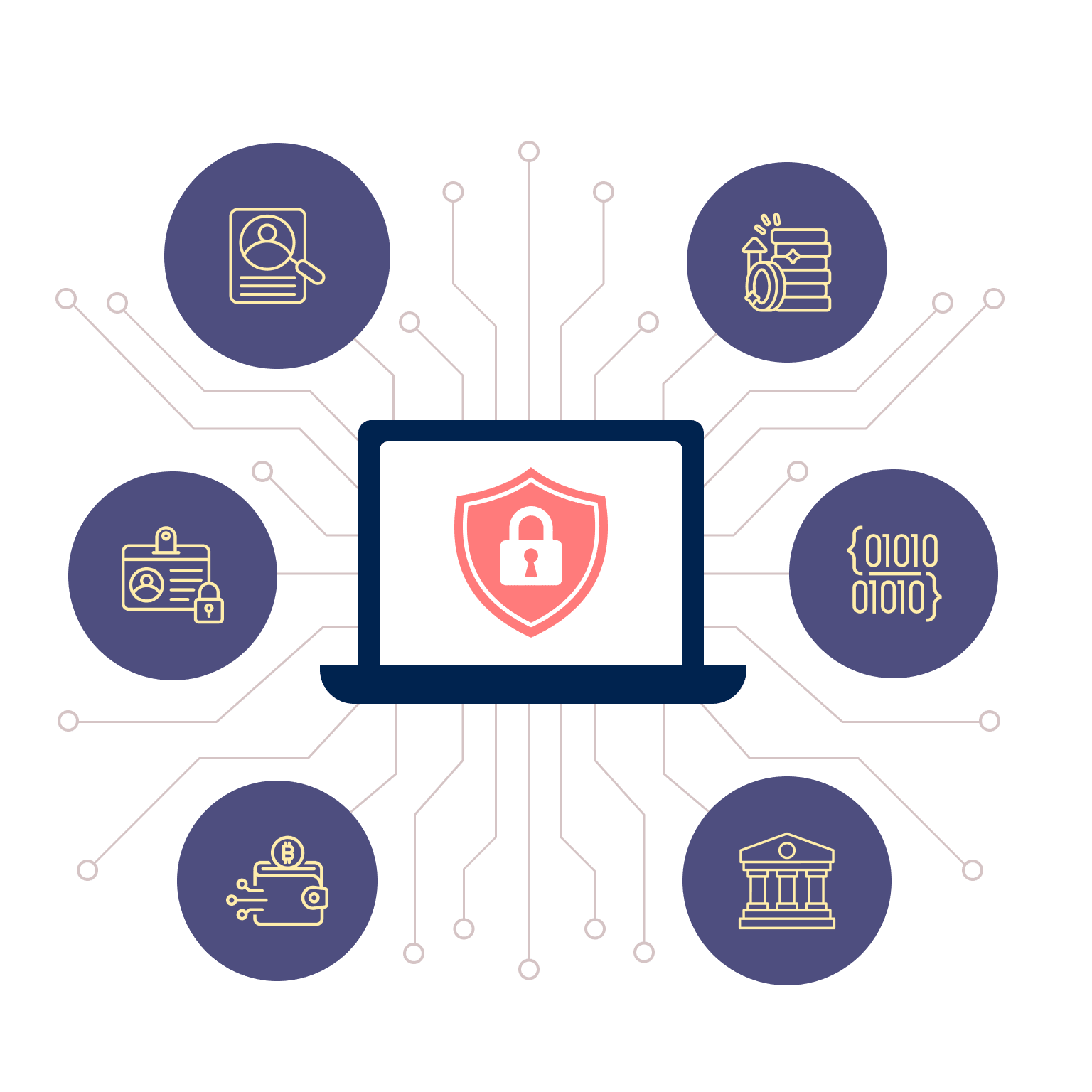
Quantum computing uses quantum mechanics to solve problems that classical computers struggle with. Unlike classical computers that use bits to represent information, quantum computers utilize qubits, which can exist in multiple states simultaneously. This allows for parallel processing and exponential computational power.
Furthermore, quantum computers can exploit two crucial phenomena-superposition and entanglement. Superposition enables qubits to exist in multiple states simultaneously, while entanglement connects qubits, allowing for the transfer of information over long distances instantaneously.
Quantum computing has the potential to revolutionize various industries, including finance, healthcare, and cybersecurity. Its ability to solve complex problems at an unprecedented speed opens up new possibilities for scientific research, drug discovery, optimization, and more.
The Basics of Quantum Computing
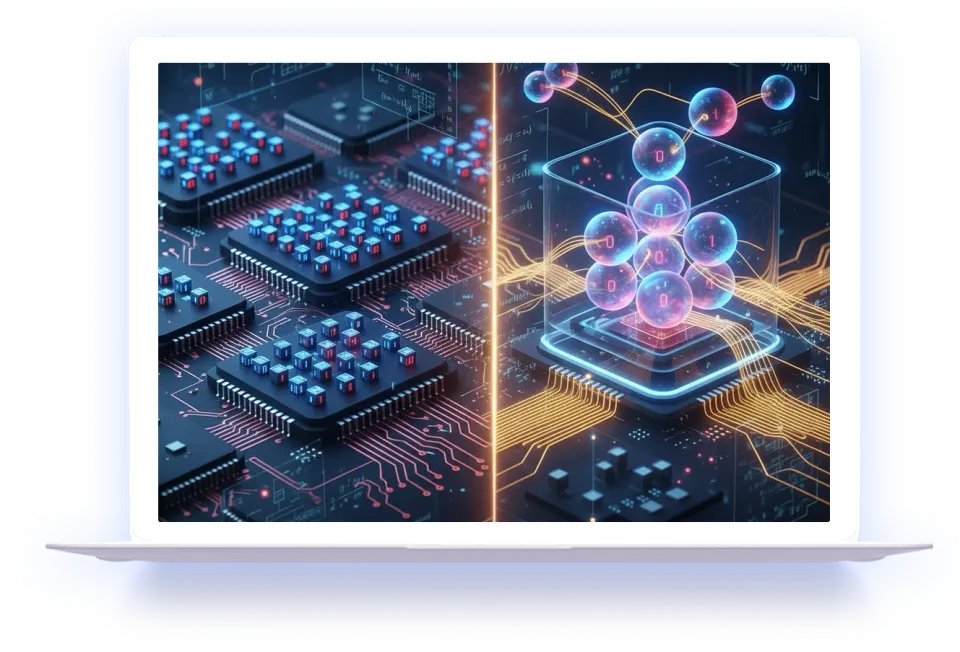
Quantum computing operates on the principles of quantum mechanics, a branch of physics that describes the behavior of particles at the subatomic level. In classical computing, information is stored in bits, which can represent either a 0 or a 1. However, in quantum computing, information is stored in qubits, which can exist in a superposition of both 0 and 1 states simultaneously.
This unique property of qubits allows quantum computers to perform parallel computations, making them significantly more powerful than classical computers for certain types of problems. Quantum algorithms, such as Grover's algorithm and Shor's algorithm, take advantage of this parallelism to solve complex mathematical problems in a fraction of the time it would take a classical computer.
Another remarkable feature of quantum computing is entanglement. When qubits are entangled, the state of one qubit becomes dependent on the state of another, regardless of the physical distance between them. This phenomenon enables quantum computers to perform operations on multiple qubits simultaneously, leading to even greater computational power.
Quantum Computing vs Classical Computing
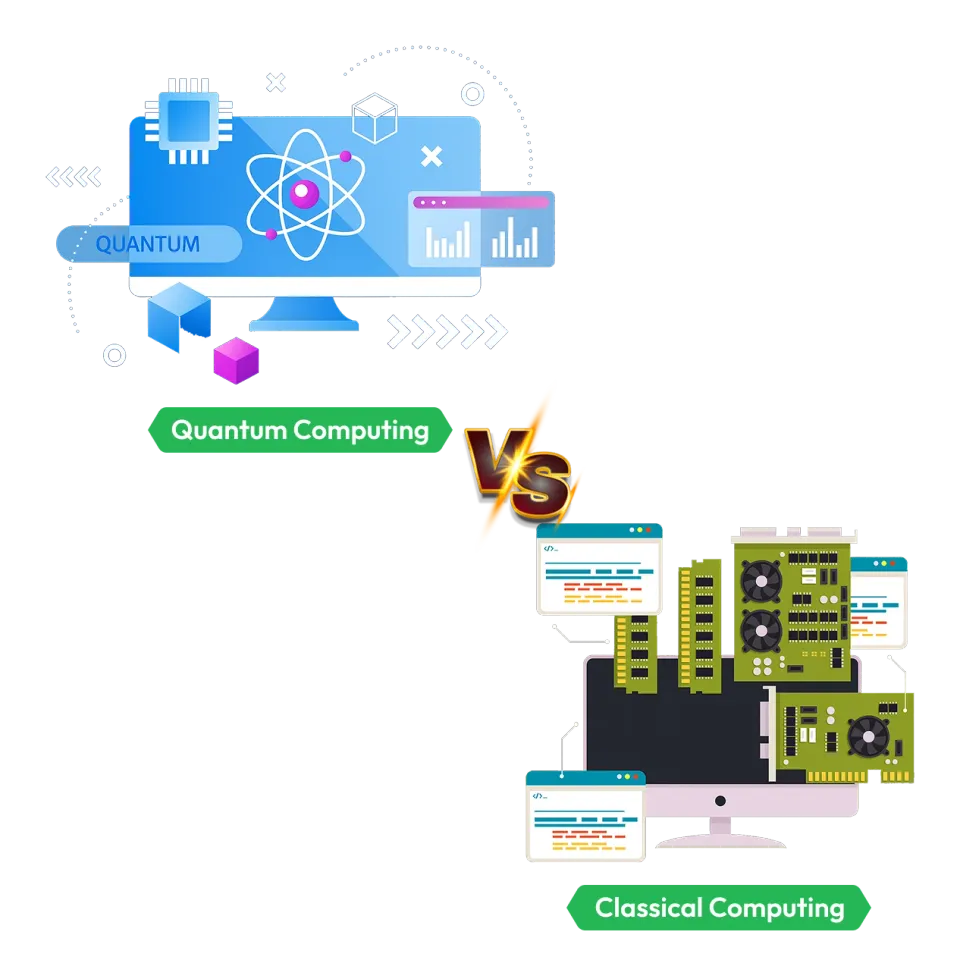
While classical computers have powered technological advancements for decades, quantum computing offers unparalleled potential. Quantum computers excel in solving specific types of problems that are beyond the reach of classical computers.
For example, quantum computers can efficiently factorize large numbers, which is essential for breaking encryption algorithms that are currently used to secure online transactions. This ability poses a significant threat to cryptographic systems that rely on the difficulty of factoring large numbers.
In addition to breaking encryption, quantum computers have the potential to revolutionize optimization problems. They can provide solutions to complex optimization challenges that classical computers struggle with, such as route planning, portfolio optimization, and supply chain management.
Furthermore, quantum computing has the potential to accelerate the development of new materials and drugs. By simulating the behavior of atoms and molecules, quantum computers can aid in the discovery of novel compounds with specific properties, could accelerate progress in pharmaceuticals and materials science.

The Threat of Quantum Computing to Cryptography
Traditional cryptographic algorithms, such as RSA and ECC, are based on mathematical problems that are assumed to be computationally infeasible for classical computers. However, the emergence of quantum computing threatens the security of these algorithms.
Quantum computers can leverage Shor's algorithm to perform factorization exponentially faster than classical computers. As a result, the encryption key pairs used in secure communication channels become vulnerable to attacks by quantum computers.
To counter this threat, researchers are actively developing quantum-resistant cryptographic algorithms. These algorithms are designed to withstand attacks from both classical and quantum computers, ensuring the security of sensitive information in the post-quantum era.
While the development of quantum-resistant cryptography is crucial, it is also important to note that quantum computing can be harnessed for secure communication. Quantum key distribution (QKD) protocols leverage the principles of quantum mechanics to establish secure cryptographic keys that are immune to interception or tampering.
As quantum computing continues to advance, the race to develop robust and secure quantum-resistant cryptography intensifies. It is an ongoing challenge that requires collaboration between researchers, industry experts, and government agencies to ensure the security of our digital infrastructure.
The Concept of Quantum-Resistant Blockchains

What is Quantum-Resistant Blockchain?
A quantum-resistant blockchain is a distributed ledger technology that is designed to withstand attacks from quantum computers. It incorporates cryptographic algorithms that cannot be efficiently solved even by quantum computers.
Quantum-resistant blockchains are built upon the principles of quantum-resistant cryptography, which is specifically designed to resist attacks from quantum computers. These blockchains utilize algorithms that are resistant to quantum algorithms, making it extremely difficult for quantum computers to break the encryption and compromise the security of the blockchain.
One of the key components of a quantum-resistant blockchain is the use of post-quantum cryptography. Post-quantum cryptography refers to cryptographic algorithms that are believed to be secure against attacks from both classical and quantum computers. These algorithms are designed to withstand attacks from quantum computers by relying on mathematical problems that are difficult to solve even with quantum computing power.
By utilizing quantum-resistant algorithms, these blockchains ensure the confidentiality, integrity, and availability of data in a quantum computing era. They provide a robust solution to the threat posed by quantum computers to traditional blockchain systems.
Why We Need Quantum-Resistant Blockchains
The need for quantum-resistant blockchains arises from the increasing vulnerability of traditional blockchain systems to quantum attacks. With the emergence of quantum computers, adversaries can potentially compromise the security of public-key cryptography used in existing cryptocurrencies and blockchain networks.
Large-scale quantum computers could break algorithms like RSA and ECC, which currently secure blockchain networks. This poses a significant risk to the confidentiality and integrity of data stored on these networks. Without quantum-resistant blockchains, sensitive information such as financial transactions, personal data, and intellectual property could be exposed to malicious actors with access to quantum computing power.
It is crucial to develop quantum-resistant blockchains to mitigate the risks posed by quantum computing and to ensure the long-term security and stability of blockchain technology. These blockchains will provide a secure foundation for various applications, including financial services, supply chain management, healthcare, and government services, among others.
Existing Quantum-Resistant Algorithms
Lattice-based cryptography
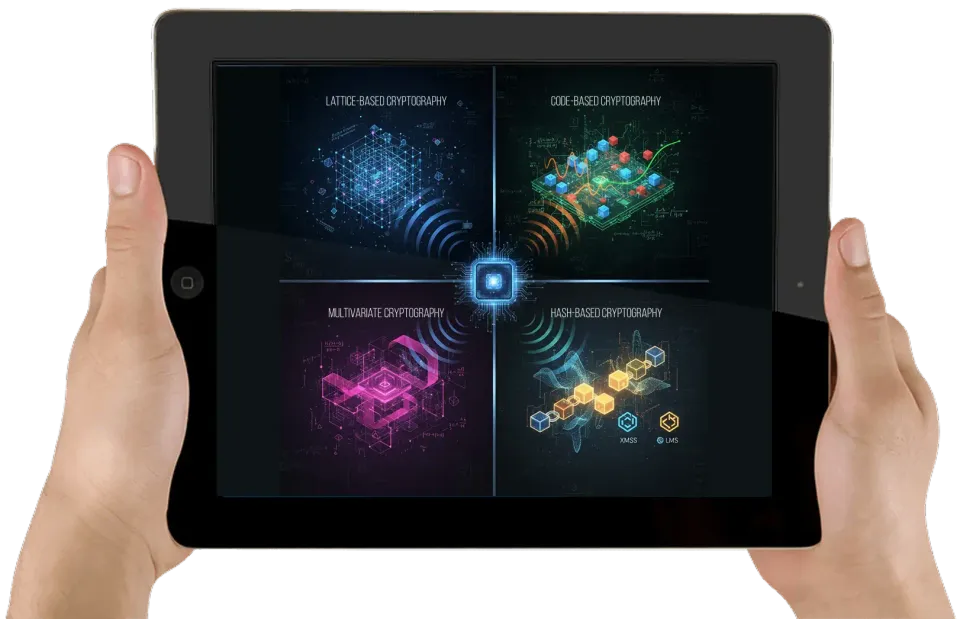
Lattice-based cryptography is a popular approach in building quantum-resistant algorithms. It relies on the hardness of certain problems in lattice theory to provide secure cryptographic schemes.
The security of lattice-based cryptography is based on the challenge of finding the shortest vector in a lattice, which is computationally demanding for classical and quantum computers. This challenge arises from the complexity of lattice problems, such as the Shortest Vector Problem (SVP) and the Learning With Errors (LWE) problem. These problems involve finding the shortest non-zero vector in a lattice or learning a random linear equation modulo a prime, respectively.
Due to its apparent resistance to quantum attacks, lattice-based cryptography is widely regarded as a promising solution. It offers a variety of cryptographic primitives, including encryption, digital signatures, and key exchange protocols. These primitives provide the necessary building blocks for secure communication and data protection in a quantum computing era.
Code-Based Cryptography
Code-based cryptography is another viable option for quantum-resistant algorithms. It relies on error-correcting codes to provide robust security against both classical and quantum attacks.
Code-based cryptographic schemes are built on the problem of decoding linear codes, which is computationally difficult for both classical and quantum computers. The security of these schemes is based on the hardness of the Syndrome Decoding Problem, which involves recovering the original message from a received codeword and its syndrome.
One of the advantages of code-based cryptography is its long history of research and development. It has been studied extensively since the 1970s and has withstood various attacks over the years. This extensive research has led to the development of efficient code-based cryptographic algorithms that can be deployed in practical applications.
Code-based cryptography offers a wide range of cryptographic primitives, including encryption, digital signatures, and key exchange protocols. These primitives can be used to secure various types of systems, including blockchain networks, where data integrity and confidentiality are of utmost importance.
Multivariate Cryptography
Multivariate cryptography involves the use of multivariate polynomial equations to provide secure cryptographic schemes. These equations are resistant to attacks based on traditional mathematical algorithms as well as those that exploit the power of quantum computers.
Implementing Quantum-Resistant Blockchains
The implementation of quantum-resistant blockchains faces several challenges. For instance, Bitcoin, Ethereum, and other blockchain platforms that depend on elliptic curve cryptography for digital signatures are particularly vulnerable to quantum attacks, which could expose wallets, transactions, and smart contracts to unprecedented risks. One significant challenge is the transition from existing blockchain systems to quantum-resistant ones. It requires careful planning, as the change involves migrating data, upgrading cryptographic algorithms, and ensuring the compatibility of existing infrastructure.
One of the main concerns during this transition is the security of the data being migrated. Organizations must ensure that the data remains secure throughout the process and that no vulnerabilities are introduced. This may involve implementing additional security measures, such as encryption and multi-factor authentication, to protect the data during the migration.
Furthermore, upgrading cryptographic algorithms is a complex task. It requires a deep understanding of both the existing algorithms and the new quantum-resistant ones.
Organizations must carefully evaluate the performance and security trade-offs of different algorithms to choose the most suitable ones for their blockchain systems. At this stage, solution providers like Datopic can help enterprises assess, prototype, and integrate post-quantum cryptography into their blockchain infrastructure, ensuring security without sacrificing scalability.
Additionally, there is a need for extensive research to identify and develop efficient quantum-resistant algorithms that can be implemented in blockchain systems without sacrificing performance and scalability. This research involves studying the properties of quantum- resistant algorithms and their potential vulnerabilities, as well as exploring novel cryptographic techniques that can withstand quantum attacks.
Case Studies of Quantum-Resistant Blockchain Implementation

Several organizations and research groups are actively exploring quantum-resistant blockchain implementation. For example, the Quantum Resistant Ledger (QRL) has developed a blockchain platform that integrates quantum-resistant algorithms.
The QRL platform utilizes a lattice-based cryptographic algorithm, which is believed to be resistant to attacks by both classical and quantum computers. This algorithm provides a high level of security while maintaining reasonable performance and scalability. The QRL team has conducted extensive research and testing to ensure the effectiveness of their quantum-resistant solution.
Other initiatives, such as the Hyperledger project, are also researching and implementing quantum-resistant features within their blockchain frameworks. Hyperledger is an open-source collaborative effort that aims to advance cross-industry blockchain technologies. They recognize the importance of quantum-resistant cryptography in ensuring the long-term security of blockchain systems and are actively working on integrating such features into their frameworks.
These case studies provide valuable insights into the challenges and potential solutions in building quantum-resistant blockchains. They demonstrate the ongoing efforts of organizations and research groups to address the security concerns posed by quantum computers and ensure the resilience of blockchain systems in the face of future threats.
The Future of Quantum-Resistant Blockchains
The future of quantum-resistant blockchains holds immense possibilities. Ongoing research aims to improve the efficiency and security of quantum-resistant algorithms, making them more practical for real-world applications. With the rapid advancement of quantum computing, the need for robust and resilient blockchain systems has become increasingly urgent.
One potential development in quantum-resistant blockchains is the exploration of new cryptographic primitives and protocols. These advancements will address specific challenges in securing blockchain systems against quantum attacks. Researchers are working tirelessly to create innovative solutions that can withstand the power of quantum computers.
Another area of focus is the development of quantum-resistant consensus algorithms. These algorithms play a crucial role in maintaining the integrity and security of blockchain networks. By leveraging the principles of quantum-resistant cryptography, consensus algorithms can ensure that transactions are validated and recorded accurately, even in the face of quantum threats.
Potential Developments in Quantum-Resistant Blockchains
In addition to cryptographic advancements, quantum-resistant blockchains are also exploring new ways to enhance scalability and efficiency. One potential development is the integration of sharding techniques, which allow the blockchain network to be divided into smaller, more manageable parts. This can significantly improve transaction throughput and reduce latency, making quantum-resistant blockchains more practical for high-demand applications.
Furthermore, ongoing research is focused on optimizing the energy consumption of quantum- resistant blockchains. By developing energy-efficient consensus algorithms and exploring alternative energy sources, researchers aim to create sustainable blockchain systems that can operate efficiently without compromising security.
Another potential development is the integration of quantum-resistant blockchains with other emerging technologies, such as Internet of Things (IoT) devices. This integration can enable secure and decentralized communication between IoT devices, ensuring the privacy and integrity of data transmitted over the network.

The Role of Quantum-Resistant Blockchains in Future Technology
Quantum-resistant blockchains will play a crucial role in shaping the future of technology. As quantum computing becomes more accessible, the need for secure and resilient blockchain systems will become paramount. Industries across the board, including finance, healthcare, supply chain, and smart cities, will rely on quantum-resistant blockchains to provide a foundation for secure transactions, data sharing, and digital identity management.
In the finance industry, quantum-resistant blockchains will revolutionize the way transactions are conducted. With the ability to resist quantum attacks, financial institutions can ensure the security and integrity of digital assets, preventing fraud and unauthorized access. Additionally, quantum-resistant blockchains can enable faster and more efficient cross-border transactions, eliminating the need for intermediaries and reducing transaction costs.
In the healthcare sector, quantum-resistant blockchains can enhance the security and privacy of patient data. By leveraging quantum-resistant cryptography, healthcare providers can ensure that sensitive medical records remain confidential and tamper-proof. This technology can also facilitate secure data sharing between different healthcare organizations, enabling seamless collaboration and improving patient care.
Supply chain management can also benefit greatly from quantum-resistant blockchains. With the ability to resist quantum attacks, supply chain networks can ensure the authenticity and traceability of products. This can help prevent counterfeiting, reduce fraud, and enhance transparency throughout the supply chain. Quantum-resistant blockchains can also enable real-time tracking of goods, optimizing logistics and improving overall efficiency.
Smart cities, with their interconnected infrastructure and reliance on data, can greatly benefit from quantum-resistant blockchains. By leveraging the security and resilience of these blockchains, smart cities can ensure the integrity of critical systems, such as transportation, energy, and public safety. Quantum-resistant blockchains can also enable secure and decentralized identity management, ensuring that citizens' personal data remains protected and under their control.
Preparing for a Quantum Future

In conclusion, building quantum-resistant blockchains is of utmost importance in safeguarding the existing blockchain ecosystem from the threats posed by quantum computing.
Understanding quantum computing, exploring existing quantum-resistant algorithms, and addressing the challenges in implementation are crucial steps in this direction.
By actively researching and developing quantum-resistant blockchains, we can ensure the long-term security, stability, and trustworthiness of blockchain technology in the face of the quantum revolution.
Datopic aims to play a critical role in this transition by offering expertise in secure data engineering, cryptographic integration, and blockchain adoption strategies, helping organizations future-proof their systems against quantum threats.

Empower Your Blockchain Security with Datopic’s Quantum-Resistant Solutions
At Datopic Technologies, we help organizations prepare for the post-quantum era with secure blockchain engineering, cryptographic modernization, and end-to-end data protection strategies.
👉 Explore Services
👉 Request a Consultation
Future-proof your systems today—stay secure in a quantum-powered world.